
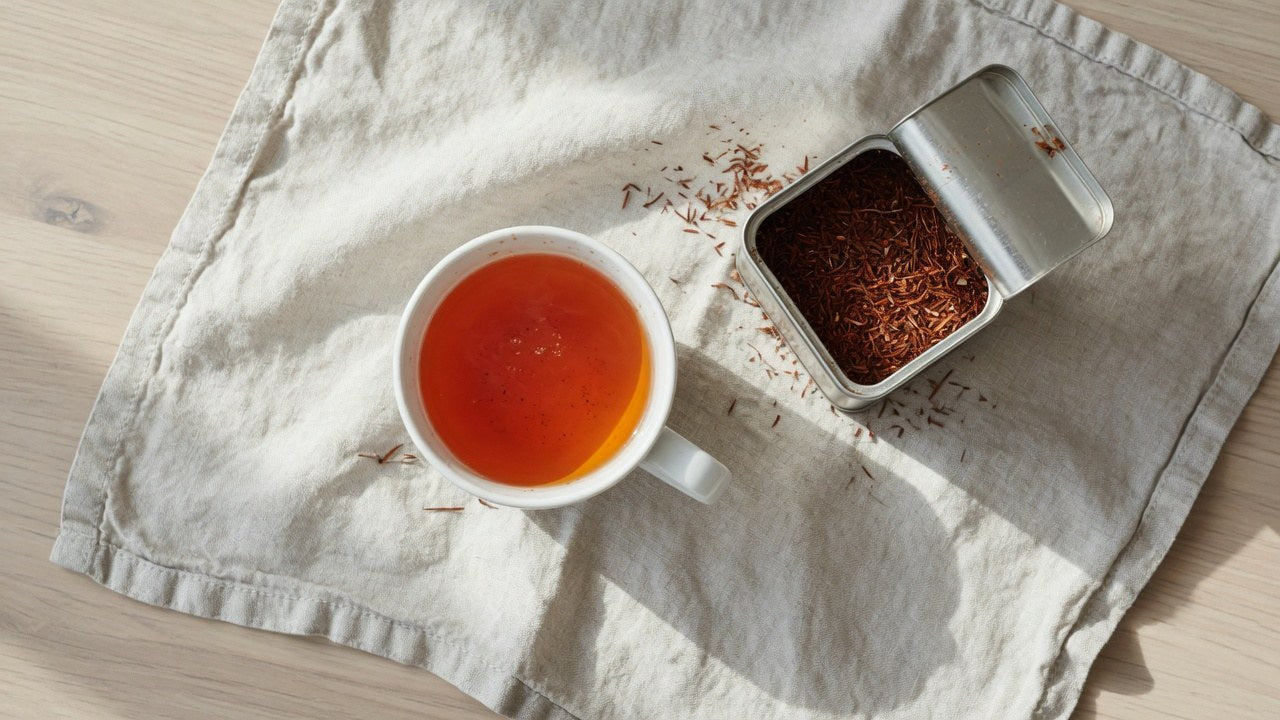
Is rooibos a superfood? There is no official, regulated definition of the word "superfood", so technically no food qualifies, but rooibos is a genuinely nutrient-rich, antioxidant-packed drink that earns much of the attention it gets. The honest answer sits between the marketing hype and the science. Below we unpack what the superfood label really means, what is evidence and what is exaggeration, and how rooibos compares to other foods that wear the same badge.
What does "superfood" actually mean?
"Superfood" is a marketing term, not a scientific or legal one. There is no nutritional threshold a food has to cross to be called one, and regulators such as the EU have restricted using the word on packaging unless it is backed by an approved health claim. In practice the label simply signals a food that is unusually rich in beneficial compounds relative to its calories.
By that loose standard rooibos fits comfortably. It is naturally caffeine-free, low in tannins, and carries a distinctive set of antioxidants. But "rich in good compounds" is not the same as "cures disease", and that gap is where most superfood marketing overreaches.
What is hype and what is evidence?
Rooibos is often promoted with sweeping promises. It helps to separate the two:
| Common claim | What the evidence suggests |
|---|---|
| "Cures or prevents cancer" | Hype. Some laboratory and animal studies are promising, but there is no proof of this effect in humans. |
| "Loaded with antioxidants" | Supported. Rooibos contains aspalathin and nothofagin, antioxidants rarely found elsewhere. |
| "Caffeine-free and gentle" | Supported. It contains zero caffeine and is low in tannins. |
| "A complete health solution on its own" | Hype. No single food or drink replaces a varied diet. |
The pattern is consistent across nutrition science: laboratory results are encouraging, but human evidence is still limited by small studies, short timeframes, and the difficulty of isolating one drink from everything else a person eats. Honest framing is that rooibos may support general wellbeing as part of a balanced diet, not that it works as a remedy.
What rooibos genuinely brings to the table
Stripped of the marketing, rooibos still offers a real and unusual profile:
- Aspalathin and nothofagin: rare antioxidants found almost exclusively in rooibos.
- Other flavonoids and phenolic acids: compounds shared with many plant foods that add to its antioxidant character.
- Caffeine-free by nature: suitable in the evening and for people who avoid caffeine.
- Low in tannins: a naturally sweet, smooth taste without the bitterness of strong black tea.
For the deeper science behind these compounds, see our scientific overview of rooibos, and for the everyday upsides our roundup of 10 health benefits of rooibos tea.
How does rooibos compare to other "superfoods"?
Rooibos sits alongside other foods that have earned the same label, each strong in its own way:
- Green tea: both are antioxidant-rich, but green tea relies on catechins and contains caffeine, while rooibos has its own aspalathin and none.
- Turmeric: valued for anti-inflammatory potential; rooibos shares the general theme of plant polyphenols rather than the same compounds.
- Berries: a benchmark for polyphenols, with a different profile from rooibos but a similar role in a varied diet.
The takeaway is that no single one of these is a magic bullet. Variety is what matters, and rooibos is a pleasant, caffeine-free way to add to that variety. You can explore the range in our rooibos tea collection.
The sustainability side of the trend
The superfood label also drives demand, which raises real questions worth knowing:
- Wild rooibos populations are sensitive to climate change in their native Cederberg region of South Africa.
- Rising demand has encouraged agricultural expansion in a water-scarce area.
- Ethical sourcing and fair recognition of the indigenous knowledge behind rooibos remain ongoing concerns.
Choosing rooibos from responsible producers is part of enjoying it well, rather than treating it as just another trend to consume.
Related products
Shop rooibos teas to try at home:
Browse the full Rooibos collection.
Frequently asked questions
Is rooibos tea really a superfood?
There is no official definition of "superfood", so no food can be one in a strict sense. That said, rooibos is genuinely nutrient-rich and high in rare antioxidants, so it deserves much of the attention, as long as you treat it as part of a varied diet rather than a cure.
What antioxidants make rooibos special?
Rooibos contains aspalathin and nothofagin, antioxidants found almost exclusively in rooibos, alongside other flavonoids and phenolic acids common to many plant foods.
Does rooibos tea have proven health benefits?
Laboratory and animal studies are promising, but human evidence is still limited by small, short studies. It is fair to say rooibos may support general wellbeing as part of a balanced diet, not that it treats any condition.
Is rooibos healthier than green tea?
Neither is simply healthier. Both are antioxidant-rich, but rooibos is caffeine-free with its own aspalathin, while green tea contains caffeine and catechins. The best approach is variety rather than picking a single winner.

