
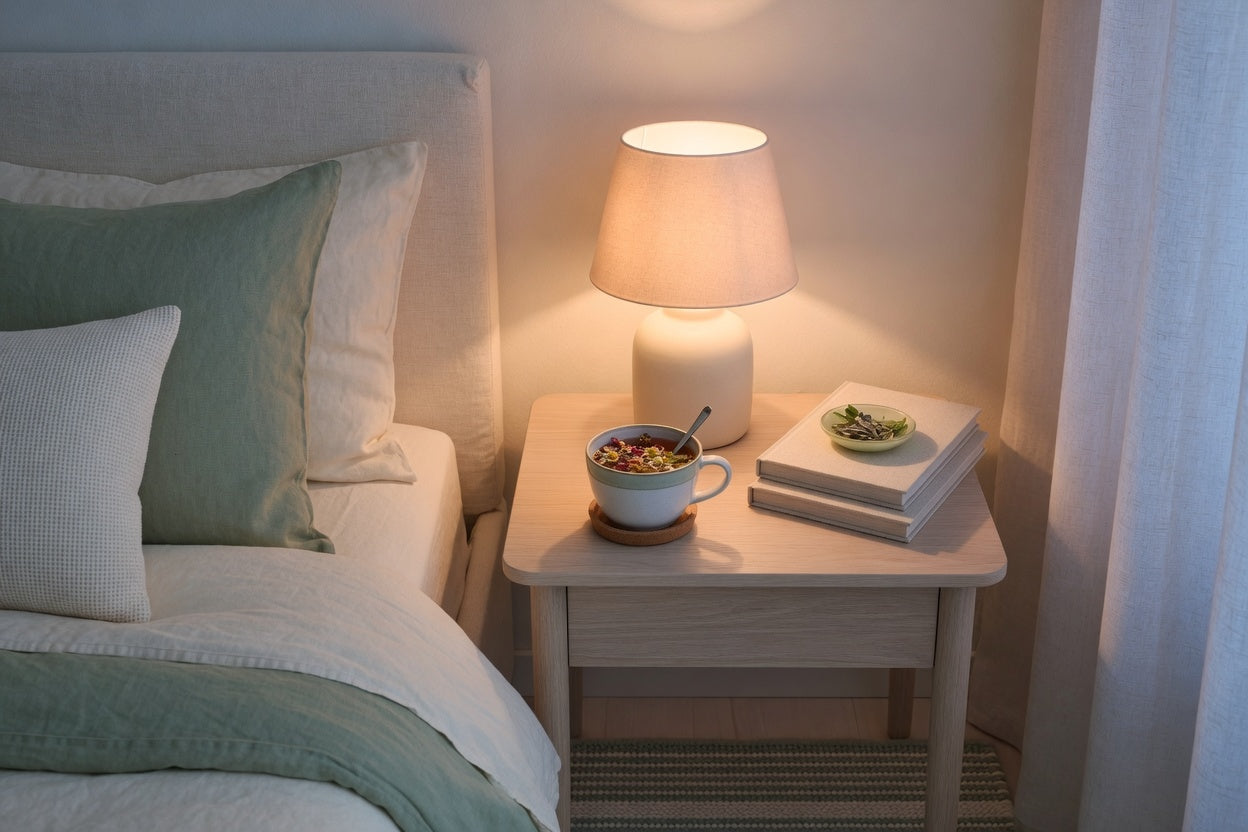
Can you drink black tea before bed? Generally, no, not right before bed if you are sensitive to caffeine. Black tea contains caffeine (around 40 to 70 mg per cup), which can delay sleep when you drink it too late in the evening. That said, black tea also contains compounds that aid relaxation, so timing is everything. Below we explain how black tea affects sleep, how late is too late, and how to enjoy it without losing rest. You can see our full range in the black tea collection.
How caffeine in black tea affects sleep
Caffeine is a stimulant that blocks the brain signals that make you feel sleepy, which is exactly why a cup helps in the morning and works against you at night. Black tea has noticeably less caffeine than coffee, but it is far from caffeine-free.
| Drink | Caffeine per cup |
|---|---|
| Black tea | 40 to 70 mg |
| Coffee | 95 to 200 mg |
Caffeine can stay active in your system for several hours after you drink it, so a late cup of black tea may still be working when you are trying to fall asleep.
Why black tea can still feel relaxing
Despite the caffeine, black tea contains compounds that pull in the other direction, toward calm:
- L-theanine: an amino acid that promotes alpha brain wave activity, linked to a state of relaxed alertness.
- Theobromine: provides a milder, longer-lasting and gentler stimulation than caffeine.
- The ritual: the simple act of preparing and sipping a warm cup is meditative and can help you wind down.
This is why black tea can feel soothing in the afternoon, even though it is not the right choice in the last hours before bed.
How late is too late for black tea?
It depends on you. People vary a lot in how they handle caffeine, based on:
- Caffeine sensitivity and how quickly your body clears it (partly genetic).
- Tolerance built up through regular tea or coffee drinking.
- Age, since older adults are often more sensitive.
- Overall health and how easily you sleep in general.
As a practical rule, if you are sensitive to caffeine, keep black tea to earlier in the day, ideally before 2pm, so it has time to clear before bedtime.
How to enjoy tea in the evening without losing sleep
You do not have to give up the evening cup, just adjust what is in it.
- Switch to decaffeinated black tea after the afternoon.
- Choose a naturally caffeine-free herbal tea such as chamomile or rooibos at night.
- Keep the calming ritual of brewing and sipping with a caffeine-free option.
- Leave a longer gap between your last caffeinated cup and bedtime.
If a bedtime brew is what you are after, see our pick of great sleep teas for bedtime. To understand black tea more broadly, read the wider benefits of black tea, and if you train late, our guide to black tea around workouts covers timing too.
In short, black tea can be part of a healthy, relaxing routine when you drink it at the right time of day. Enjoy it earlier, mind the caffeine in the evening, and your sleep will thank you.
Related products
For evenings, prefer caffeine-free cups (save black tea for daytime):
Browse the full Rooibos collection.
Frequently asked questions
Can you drink black tea before bed?
It is best avoided right before bed if you are sensitive to caffeine. Black tea contains around 40 to 70 mg of caffeine per cup, which can delay sleep. A decaffeinated or herbal tea is a better late-evening choice.
How much caffeine is in black tea compared with coffee?
A cup of black tea has about 40 to 70 mg of caffeine, while a cup of coffee has roughly 95 to 200 mg. Black tea is gentler, but it is not caffeine-free.
How long before bed should I stop drinking black tea?
If you are sensitive to caffeine, stop in the early afternoon, ideally before 2pm. Caffeine can stay active for several hours, so an earlier cutoff gives it time to clear.
Does black tea help you relax?
It can. Black tea contains L-theanine, which supports relaxed alertness, and the ritual of brewing and sipping is itself calming. This makes it soothing earlier in the day, even though it is not ideal right before sleep.
What can I drink instead of black tea at night?
Choose a naturally caffeine-free herbal tea such as chamomile or rooibos, or a decaffeinated black tea. You keep the warm, calming ritual without the caffeine that disrupts sleep.


