
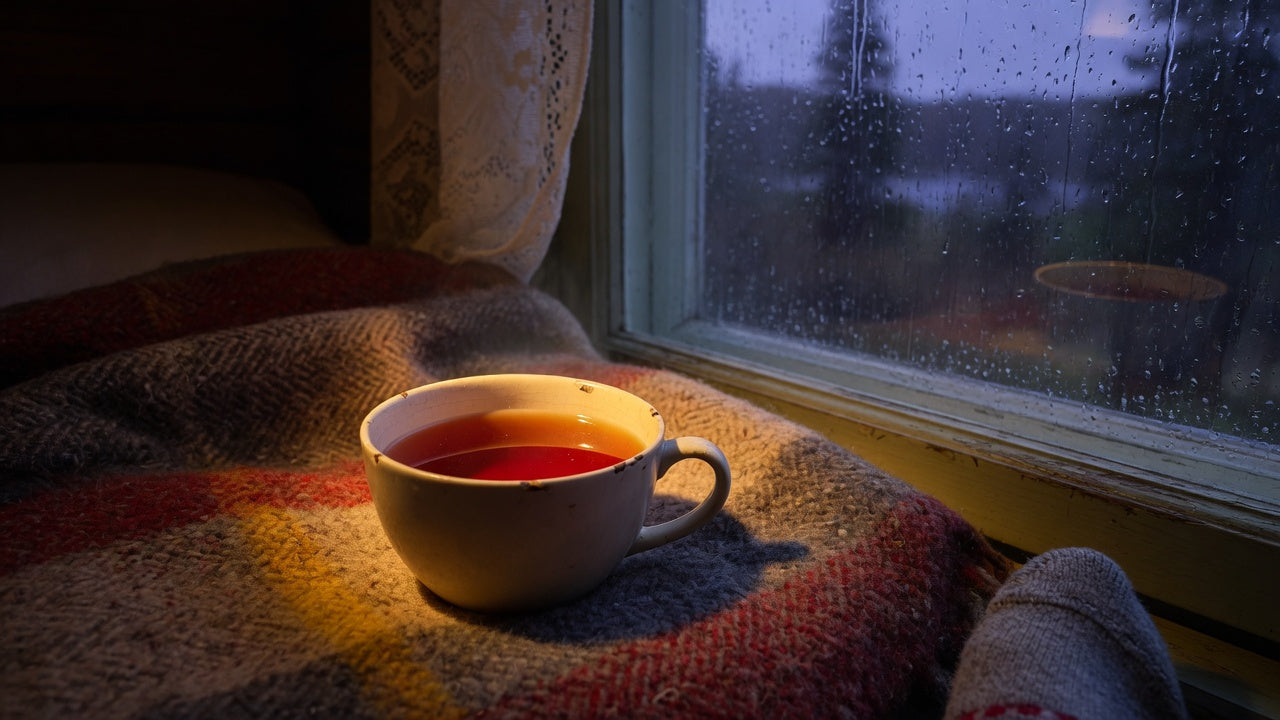
No, rooibos tea does not contain any caffeine. It is naturally 100% caffeine-free, and unlike decaffeinated tea or coffee, it never contained caffeine in the first place, so nothing has to be processed out. That makes rooibos tea a great choice at any time of day, including the evening. But why does this popular South African drink contain no caffeine when most other teas do? The answer lies in botany, evolution, and the unique place where rooibos grows.
Not a true tea: the botanical reason

The main reason rooibos is caffeine-free is simple but fundamental: it is not a true tea. All true teas, black, green, white, and oolong, come from the same plant species, Camellia sinensis, which naturally produces caffeine as a built-in insecticide to protect itself from pests.
Rooibos (Aspalathus linearis) is a member of the legume family (Fabaceae), making it more closely related to peas and beans than to tea. As a legume, rooibos follows the pattern of its plant family, which does not include caffeine production in its genetic makeup. On a genetic level, rooibos simply lacks the genes that code for the enzymes used to build caffeine.
How the Cederberg region shaped rooibos
Rooibos is native to a small area in South Africa's Western Cape, the Cederberg region. This harsh, mountainous environment shaped the plant in several ways:
- Unique ecological pressures: the dry climate, sandy soil, and extreme temperature swings created very different evolutionary pressures from those faced by tea plants in Asia.
- Alternative defences: instead of caffeine, rooibos evolved other protective compounds, including polyphenols and antioxidants such as aspalathin, which is unique to rooibos.
- Efficient use of energy: producing caffeine is costly for a plant. In the nutrient-poor Cederberg soils, rooibos put its resources into drought resistance rather than caffeine.
What rooibos contains instead of caffeine
In place of caffeine, rooibos offers a unique profile of compounds that give it both its health benefits and its taste:
- Aspalathin and nothofagin: rare antioxidants found almost exclusively in rooibos.
- Flavonoids: including quercetin and luteolin.
- Phenolic acids: which add to its antioxidant properties.
- Essential minerals: such as calcium, manganese, and fluoride.
Together these give rooibos its reddish colour and slightly sweet, nutty flavour, all without the bitter notes often linked to caffeine and tannins.
Benefits of a naturally caffeine-free tea
The absence of caffeine is not just a botanical curiosity. It brings real, practical benefits:
- No processing required: unlike decaffeinated teas, which use chemical or water processes to strip caffeine out, rooibos is caffeine-free as nature made it.
- No time limits: enjoy it any time, including right before bed, without disrupting your sleep.
- Suitable for sensitive groups: generally safe for children, during pregnancy, and for anyone with caffeine sensitivity (check with your doctor if unsure).
- No caffeine side effects: no jitters, no raised heart rate, no caffeine-driven anxiety.
Can you drink rooibos tea before bed?
Yes. Because it is caffeine-free, rooibos is one of the best teas to drink in the evening. Many people use a warm cup as part of a wind-down routine, and its naturally sweet taste means it is satisfying without sugar. If you are building an evening ritual, see our roundup of great sleep teas for bedtime.
Related products
Browse caffeine-free rooibos and evening-friendly cups:
Browse the full Rooibos collection.
Frequently asked questions
Does rooibos tea have any caffeine?
No. Rooibos is naturally 100% caffeine-free and contains zero milligrams of caffeine, because it comes from a legume rather than the caffeine-producing tea plant.
Is rooibos tea decaffeinated?
No. Decaffeinated teas have had caffeine removed through processing. Rooibos never contained caffeine, so it needs no such treatment and keeps its natural composition.
Can I drink rooibos tea at night?
Yes. With no caffeine, rooibos will not keep you awake, which makes it a popular choice for the evening and before bed.
Is rooibos tea safe during pregnancy and for children?
Because it is caffeine-free and low in tannins, rooibos is generally considered suitable during pregnancy and for children. As with any dietary choice during pregnancy, check with your healthcare provider.


