
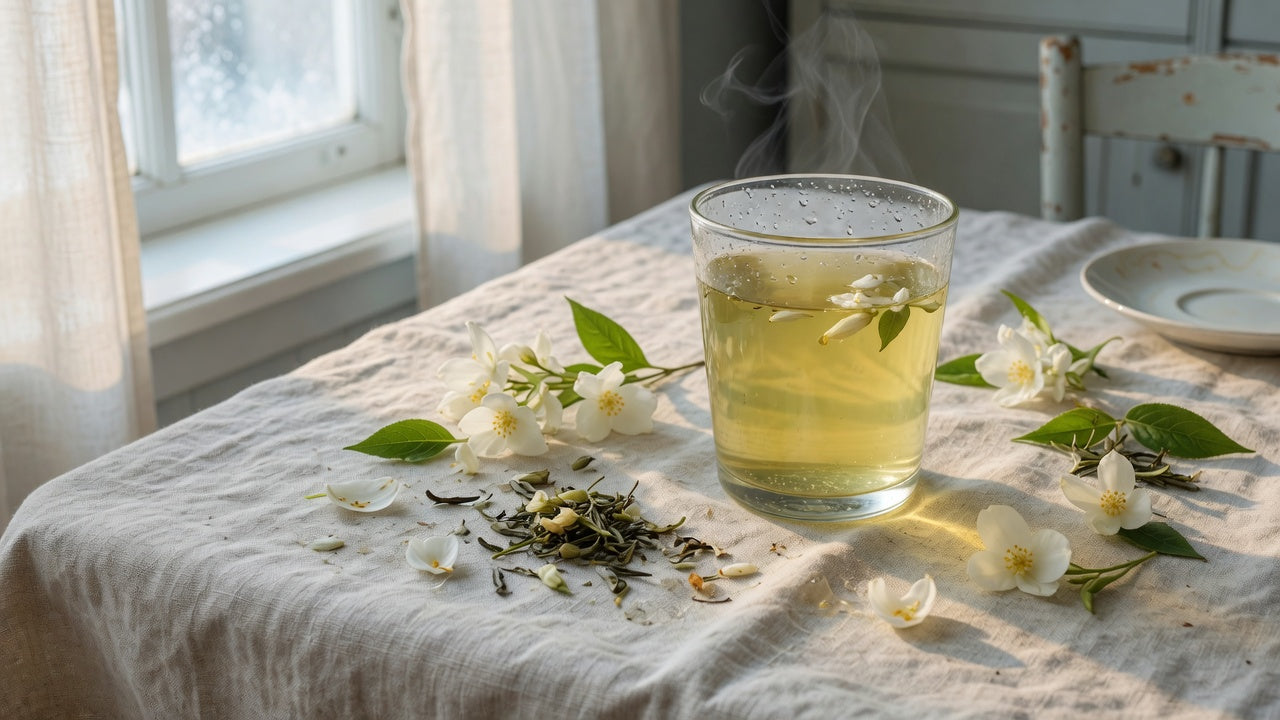
Jasmine tea is usually green tea that has been scented with jasmine blossoms so the cup carries a clear floral perfume over a soft green base. It is one of the most recognisable scented teas in the world: pale liquor, gentle sweetness, and an aroma that should smell like flowers rather than perfume. If floral greens appeal to you, start with a classic jasmine and keep the water cooler than for black tea. Explore more options in our green tea collection.
How jasmine tea is made
Producers begin with finished tea leaves, most often green. Fresh jasmine flowers open at night, and the leaves are layered with blossoms so they absorb the fragrance. That scenting may be repeated over several nights for a deeper aroma. The spent flowers are then removed. Higher grades use better leaf and more careful scenting; lower grades may rely more heavily on flavouring oils.
You will also see jasmine on white tea or other bases, but when people say jasmine tea they usually mean a scented green. For a broader green tea map, read green tea vs herbal tea and our post on gunpowder tea.
What does jasmine tea taste like?
A good cup is fragrant and clean: floral on the nose, light to medium body, and a soft finish. If it tastes soapy, harsh, or flat, the scenting quality may be low or the brew may be too hot. Jasmine should support the tea, not hide poor leaf.
Serve it plain. Milk is uncommon with jasmine green tea because it dulls the blossom character. A small pot for two is often nicer than a long stewing mug.
How to brew jasmine tea
| Step | Recommendation |
|---|---|
| Water temperature | About 75 to 85C (167 to 185F) |
| Leaf amount | About 1 teaspoon per cup |
| Steep time | 2 to 3 minutes |
| Lid | Cover the pot to keep aroma in |
| Re-steep | Often pleasant for a second cup |
If the cup turns bitter, drop the temperature or shorten the steep before you add more leaf. For general brewing discipline across types, use how to make the perfect cup of tea.
Caffeine and when to drink it
Because jasmine tea is usually true tea, it contains caffeine. Many people enjoy it in the late morning or afternoon when they want something lighter than coffee but more fragrant than plain green tea. For evenings, switch to naturally caffeine-free options such as rooibos or herbal mint and berry blends.
Buying and storing jasmine tea
Look for a lively floral smell when you open the pack. Store it airtight and away from spices, coffee, and sunlight. Scented teas can pick up cupboard smells quickly, and once the aroma fades the cup loses its reason to exist. Airtight tins help; see also tea storage tips.
Related products
Floral and classic green teas from Nordqvist:
Browse the full Green tea collection.
Frequently asked questions
Is jasmine tea a green tea?
Most classic jasmine tea starts with green tea leaves that are scented with jasmine flowers. You may also find jasmine on white or oolong bases, but green is the most common.
How is jasmine tea scented?
Tea leaves are layered with fresh jasmine blossoms so they absorb the fragrance, often over several nights. Flowers are then removed. Quality depends on leaf grade and how carefully scenting is done.
What does jasmine tea taste like?
Expect a floral perfume with a soft green tea body. Good jasmine is fragrant without tasting soapy. The liquor is usually pale gold to light green.
How should I brew jasmine tea?
Use water around 75 to 85C (167 to 185F) and steep 2 to 3 minutes. Boiling water and long steeps can push bitterness and flatten the blossom aroma.
Does jasmine tea have caffeine?
Yes, when it is made from true tea leaves. A cup usually has less caffeine than coffee, similar to other green teas, depending on brew strength.