
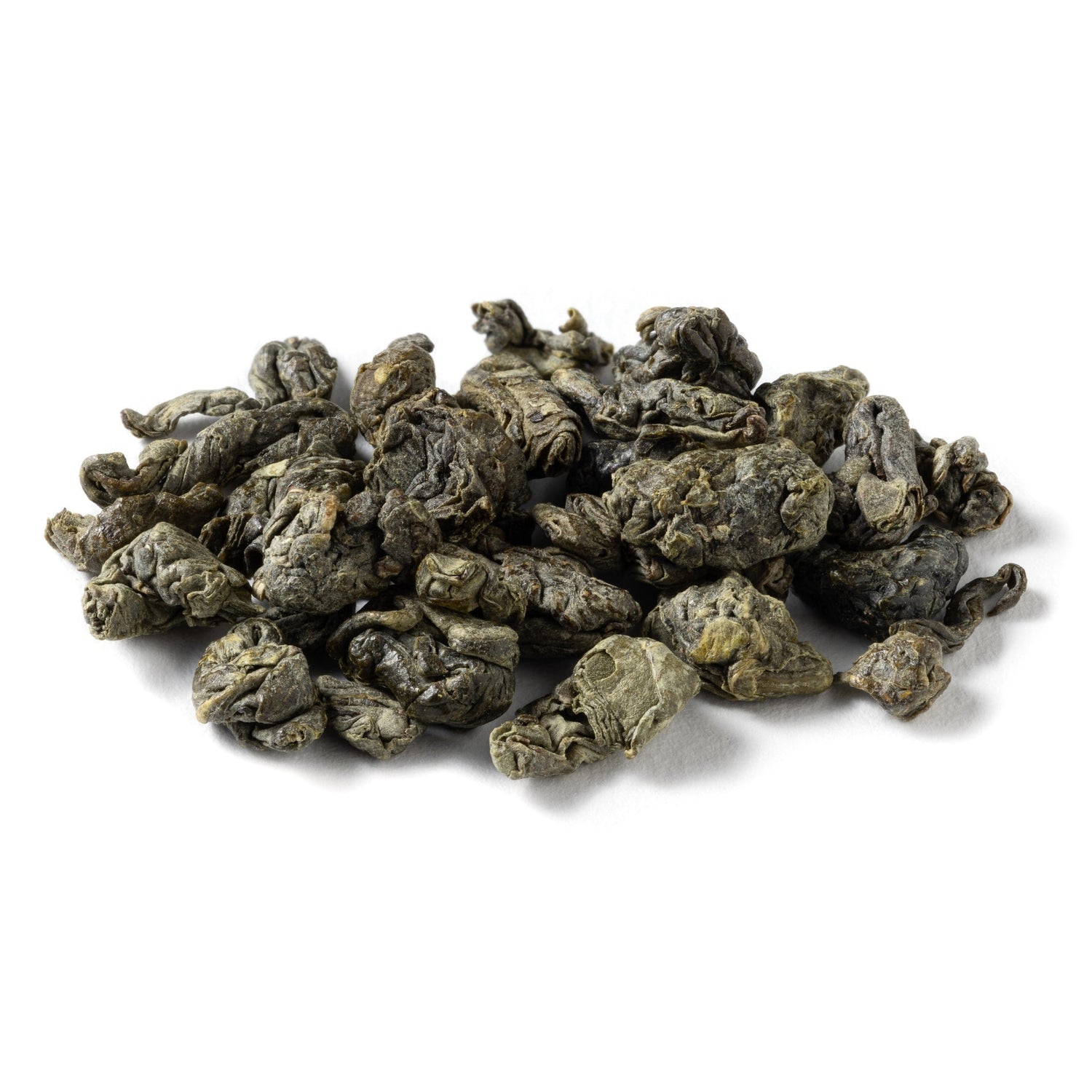
Gunpowder tea is green tea rolled into tight pellets that look a little like old gunpowder grains. Rolling protects aroma, travels well, and gives a bolder, slightly toasty cup. If you want green tea with more backbone, start here: our green tea collection.
Where gunpowder tea comes from
Gunpowder-style tea is most often linked with China, especially Zhejiang province, though similar rolled greens are made more widely today. Producers heat the leaf to stop oxidation (the step that keeps it a green tea), then roll it into pellets before final drying. Older methods used hand rolling; modern production often uses machines while still aiming for a tight, even pellet.
The name is European and descriptive. Traders saw the dark olive pellets and compared them to gunpowder. It is not flavoured with smoke by default, even if some cups taste gently toasty or smoky depending on the batch and how you brew.
What does gunpowder tea taste like?
Expect a fuller body than delicate steamed greens, with notes that can read as grassy, chestnut-like, or lightly roasted. A good cup should stay clean. Harsh bitterness usually means the water was too hot or the steep ran too long. When the pellets open in the pot, the liquor often deepens from pale gold to a richer green-gold.
Compared with jasmine green tea, gunpowder is less floral and more direct. Compared with many Japanese greens, it is often less seaweed-like and more robust. For a side-by-side sense of green tea styles, see our guide to matcha, sencha, and gyokuro.
How to brew gunpowder tea
Treat gunpowder as a green tea, not as a black tea. Boiling water will push out bitterness and flatten the aroma.
| Step | Recommendation |
|---|---|
| Water temperature | About 75 to 85C (167 to 185F) |
| Leaf amount | About 1 teaspoon of pellets per cup (adjust to taste) |
| Steep time (first cup) | 2 to 3 minutes |
| Vessel | Teapot, gaiwan, or mug with an infuser |
| Later infusions | Often 2 to 3 rounds as pellets open |
Rinse optional: a very short hot rinse can help pellets start opening, then discard that water and brew the cup you will drink. For a broader chart across tea types, use our guide on how to make the perfect cup of tea.
Does gunpowder tea have caffeine?
Yes. Gunpowder is made from the tea plant, so it contains caffeine. A typical cup usually has less caffeine than coffee, but more than herbal infusions that are not true tea. Leaf amount, water heat, and steep time all change the result. If you want a evening cup without caffeine, choose rooibos or herbal tea instead of green tea.
How to store gunpowder tea
Keep pellets in an airtight tin or jar, away from light, heat, moisture, and strong kitchen smells. Because the leaf is tightly rolled, it can keep its character well when stored properly, but it will still stale if left open. For a full storage checklist, see how to store tea leaves properly.
Related products
Shop Nordqvist gunpowder teas:
Browse the full Gunpowder tea collection.
Frequently asked questions
What is gunpowder tea made from?
Gunpowder is a green tea, most often from Camellia sinensis leaves that are withered, heated, and rolled into small tight pellets before drying.
What does gunpowder tea taste like?
It tastes bold and slightly smoky or toasty for a green tea, with a fuller body than many lighter greens. Well-made cups stay clean rather than bitter if you do not over-steep.
What temperature should I brew gunpowder tea at?
Use water around 75 to 85C (167 to 185F), not a rolling boil. Steep about 2 to 3 minutes for the first infusion and taste as you go.
Does gunpowder tea have caffeine?
Yes. As a green tea it contains caffeine, typically less than a similar cup of coffee, with the exact amount depending on leaf amount, water heat, and steep time.
Can I re-steep gunpowder tea?
Yes. The tight pellets often open gradually, so a second and sometimes third infusion can work well. Use slightly hotter water or a bit more time on later steeps.

