
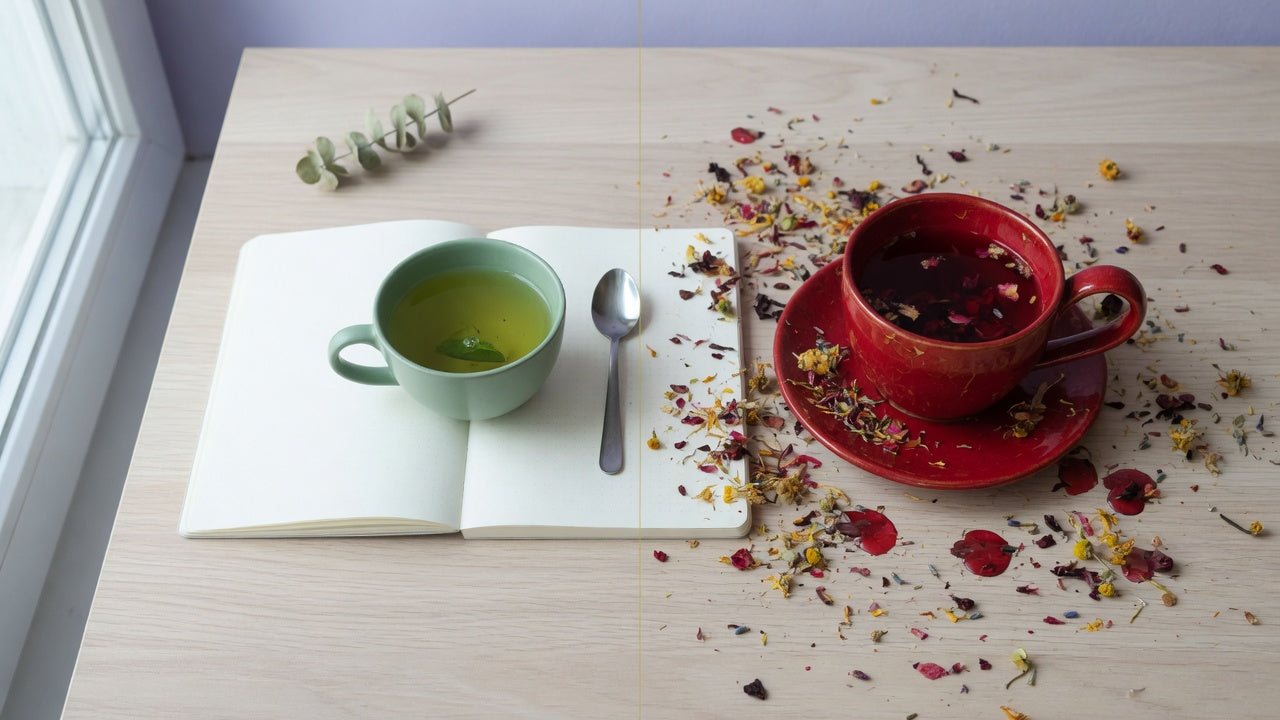
The key difference is simple: green tea is a true tea made from the Camellia sinensis plant and contains caffeine, while herbal tea is not a true tea at all. Herbal tea (also called a tisane) is an infusion of herbs, flowers, roots, spices, or fruit, and is naturally caffeine-free. So green tea gives you a gentle lift and antioxidants, while herbal tea offers a caffeine-free cup in countless flavours. Let's compare the two.
Green tea vs herbal tea at a glance
| Feature | Green tea | Herbal tea (tisane) |
|---|---|---|
| Plant source | Camellia sinensis (a true tea) | Herbs, flowers, roots, spices, or fruit |
| Caffeine | Yes, moderate (about 25 to 35 mg per cup) | Caffeine-free (with rare exceptions) |
| Flavour | Fresh, grassy, slightly vegetal | Varies entirely with the ingredients |
| Key compounds | Catechins and polyphenols, especially EGCG | Depends on the herb, often specific vitamins and minerals |
| Often chosen for | Gentle energy, focus, antioxidants | Relaxation, digestion, a caffeine-free option |
| Best time | Morning or afternoon | Any time, including the evening |
What is green tea?
Green tea is a true tea made from the Camellia sinensis plant, the same source as black, white, and oolong teas. What sets it apart is its minimal oxidation: after harvesting, the leaves are quickly heated to prevent oxidation, which preserves their green colour and antioxidant profile. Explore the range in our green tea collection.
Key characteristics of green tea
- Originated in China and Japan
- Contains caffeine (about 25 to 35 mg per cup)
- Rich in antioxidants called catechins, especially EGCG
- Typically has a grassy, slightly vegetal flavour
- Ranges in colour from light green to golden-green
What is herbal tea?
Herbal tea, also known as a tisane, is not a true tea at all. Instead of Camellia sinensis leaves, herbal teas are made by infusing herbs, flowers, roots, spices, or fruit in hot water. They are naturally caffeine-free and come in a huge range of flavours and potential benefits. Browse the options in our herbal tea collection.
Key characteristics of herbal tea
- Made from a variety of plant materials
- Caffeine-free (with rare exceptions)
- Diverse flavour profiles
- Can be enjoyed hot or cold
- Includes popular varieties like chamomile, peppermint, and rooibos
Nutrition and benefits compared
Frame these as supportive rather than guaranteed. Green tea is prized for its antioxidants, while herbal tea's benefits depend on the herbs used.
Green tea
- High in polyphenols, especially EGCG (epigallocatechin gallate)
- Contains moderate caffeine (about 25 to 35 mg per cup)
- May support metabolism and weight management
- May support brain function and focus
- May support heart health
Herbal tea
- Nutrition varies widely with the ingredients
- Zero to minimal caffeine
- Often rich in specific vitamins and minerals
- May support digestion, relaxation, and the immune system
- Chamomile in particular is a popular choice before bed
Green tea's calm-but-alert character comes from L-theanine working alongside caffeine. If that interests you, read why green tea feels so relaxing.
Taste and how to brew
Green tea has a delicate, sometimes astringent flavour and is best brewed at lower temperatures, around 75 to 85°C (160 to 180°F), for 1 to 3 minutes. It can turn bitter if over-brewed, so keep the steep short. Herbal tea tastes however its ingredients dictate, is usually brewed with boiling water for 5 to 7 minutes, and is generally more forgiving to prepare.
Which one should you choose?
It comes down to your goals and the time of day.
Choose green tea if you want a gentle caffeine boost, support for metabolism and focus, and the antioxidant benefits of catechins.
Choose herbal tea if you want a caffeine-free cup, a specific benefit such as relaxation or digestion, an evening-friendly drink, or simply a wide variety of flavours.
You do not have to pick a side. Many people drink green tea earlier in the day and switch to a caffeine-free herbal infusion in the evening. The best choice is the one that suits your body and your taste.
Related products
Compare a true green tea with caffeine-free herbals:
Browse the full Natural Tea Series.
Frequently asked questions
What is the difference between green tea and herbal tea?
Green tea is a true tea from the Camellia sinensis plant and contains caffeine. Herbal tea is not a true tea: it is an infusion of herbs, flowers, roots, spices, or fruit and is naturally caffeine-free. Their flavours and benefits differ accordingly.
Is green tea a herbal tea?
No. Green tea comes from the Camellia sinensis plant, the same source as black and white tea, so it is a true tea and contains caffeine. Herbal teas are made from other plants and are caffeine-free, which is why they are technically called tisanes.
Does herbal tea have caffeine?
Herbal teas are naturally caffeine-free, with rare exceptions. Because they are made from herbs, flowers, roots, or fruit rather than tea leaves, they make a good choice for the evening or for anyone reducing caffeine.
Which is healthier, green tea or herbal tea?
Neither is simply healthier; they offer different benefits. Green tea is rich in antioxidants such as EGCG and may support metabolism and focus, while herbal teas may support relaxation or digestion depending on the herbs used. Choose based on what you want from your cup.
Can I drink green tea and herbal tea on the same day?
Yes. Many people enjoy green tea in the morning or afternoon for a gentle lift, then switch to a caffeine-free herbal tea in the evening to wind down. They complement each other well.


