
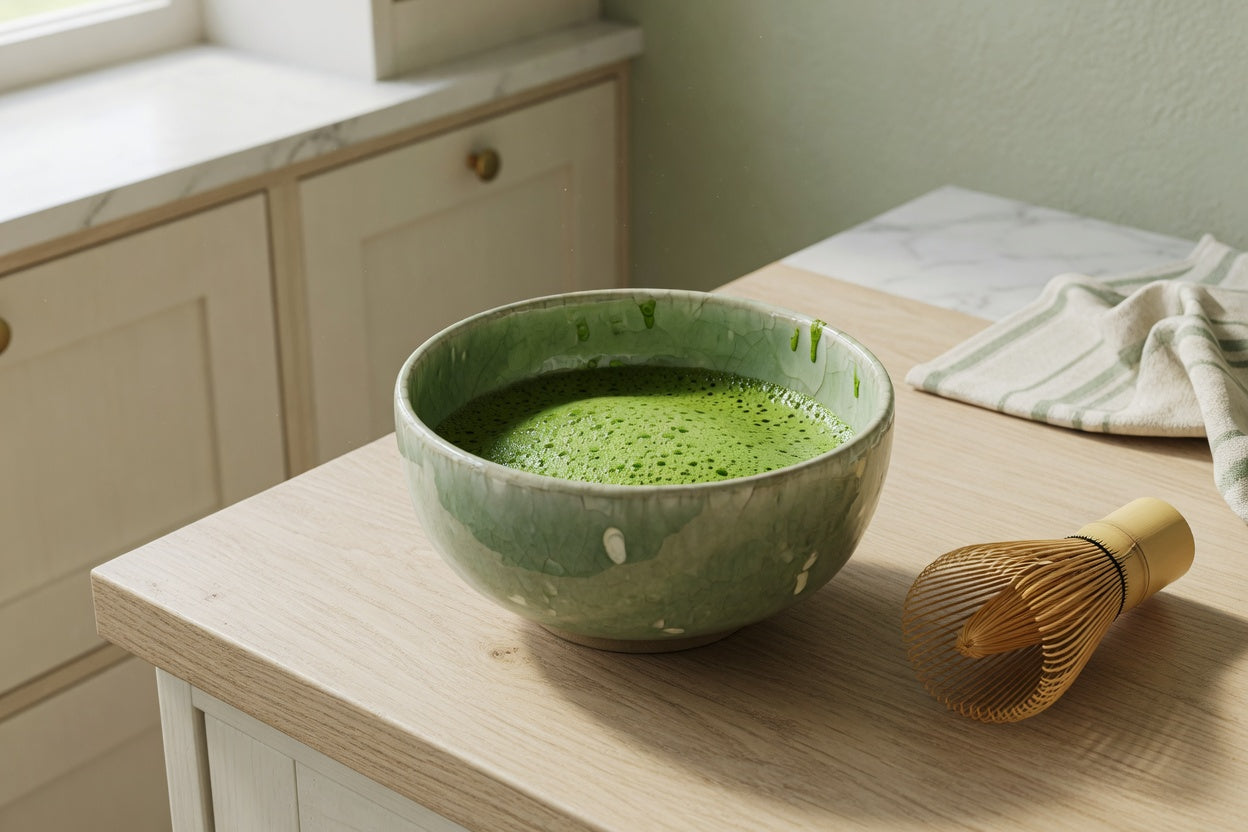
The short answer: matcha is a shade-grown green tea ground into a fine powder, sencha is grown in full sun and rolled into leaves, and gyokuro is a premium shade-grown leaf tea that sits between the two. All three come from the same plant, Camellia sinensis, but differences in sunlight, processing, and how you brew them give each one a distinct flavour, colour, and caffeine level. Here is how they really compare.
If you are new to Japanese green tea, our guide to what matcha is and where it comes from sets the scene, and you can explore all three styles in our green tea collection.
At a glance
| Tea | Grown | Form | Flavour | Caffeine per cup |
|---|---|---|---|---|
| Matcha | Shade, 3 to 4 weeks | Stone-ground powder | Rich, creamy, umami | 60 to 80 mg (high) |
| Sencha | Full sun | Rolled leaf | Fresh, grassy, brisk | 30 to 50 mg (moderate) |
| Gyokuro | Shade, 3 to 5 weeks | Rolled leaf | Sweet, deep umami | 50 to 70 mg (high) |
Cultivation: the role of sunlight
How the leaves are grown is the single biggest factor in their final taste and nutrient profile, and the key variable is sun exposure.
- Matcha is shade-grown. About three to four weeks before harvest, farmers cover the plants to block roughly 90% of sunlight. This pushes the plant to produce more chlorophyll and amino acids, which gives matcha its vivid green colour and rich umami taste. The youngest, most tender leaves are then steamed, dried, and stone-ground into a fine powder.
- Sencha is grown in full sunlight. More sun raises its catechin (antioxidant) levels and gives it a brighter, more astringent flavour. The leaves are steamed to halt oxidation, then rolled into slender needle shapes and dried.
- Gyokuro is also shade-grown, but for slightly longer, typically three to five weeks. The extended shading boosts L-theanine, the amino acid behind its sweet, umami character. Unlike matcha, gyokuro is not ground: the leaves are rolled and dried like sencha, preserving their delicate structure.
Flavour profiles: what do they taste like?
Each tea has a distinct taste and mouthfeel shaped by its cultivation and processing.
Matcha
- Rich, smooth, and creamy with a deep umami taste.
- Slightly sweet and vegetal, with a lingering, mellow finish.
- Little to no bitterness when good ceremonial-grade matcha is used.
Sencha
- Fresh, grassy, and slightly astringent.
- A balanced sweetness with a refreshing, brisk bite.
- Lighter-bodied and crisper than matcha or gyokuro.
Gyokuro
- Intensely umami, full-bodied, and naturally sweet.
- Smooth and mellow, with almost no bitterness.
- Sometimes described as having a seaweed or oceanic note, thanks to its high L-theanine content.
Caffeine: which one packs the biggest punch?
Caffeine varies with growing conditions, processing, and how the tea is consumed.
- Matcha (60 to 80 mg per cup, high): because you drink the entire leaf as powder, matcha has the highest caffeine of the three, roughly comparable to a cup of coffee.
- Sencha (30 to 50 mg per cup, moderate): the level depends on the harvest. First-flush sencha (shincha) carries slightly more caffeine than later pickings.
- Gyokuro (50 to 70 mg per cup, high): although it is a leaf tea, gyokuro is close to matcha because shading increases caffeine retention in the leaves.
Want to go deeper on this? See our explainer on caffeine and tannin in tea.
Brewing: getting the best from each
The same gentle approach suits all three: avoid boiling water, which scorches green tea and makes it bitter. Whisk matcha into water at about 80 C, steep sencha at around 70 to 80 C for one to two minutes, and brew gyokuro cooler still, around 50 to 60 C, to coax out its sweetness. For the full whisking method, see our guide on how to make matcha tea.
Which should you choose?
Each tea offers a different experience, so the best one depends on the moment. Reach for matcha when you want a focused, energising ritual, sencha for an everyday refreshing cup, and gyokuro for a slow, indulgent treat. The easiest answer, of course, is to try all three and find your favourite.
Related products
Compare styles with these green teas from our range:
Browse the full Green tea collection.
Frequently asked questions
What is the main difference between matcha, sencha, and gyokuro?
Matcha is shade-grown and ground into a powder you whisk into water, sencha is grown in full sun and brewed as rolled leaves, and gyokuro is a premium shade-grown leaf tea brewed cool for a sweet, umami flavour.
Which has the most caffeine: matcha, sencha, or gyokuro?
Matcha has the most, at roughly 60 to 80 mg per cup, because you consume the whole leaf. Gyokuro is close at 50 to 70 mg, while sencha is more moderate at 30 to 50 mg.
Is gyokuro the same as matcha?
No. Both are shade-grown, but gyokuro leaves are rolled and dried and brewed like sencha, whereas matcha leaves are stone-ground into a fine powder that is whisked into water and consumed in full.
Which Japanese green tea is best for beginners?
Sencha is the easiest starting point: it is widely available, forgiving to brew, and refreshing. Matcha is a great next step if you want a richer, more ceremonial experience.


