
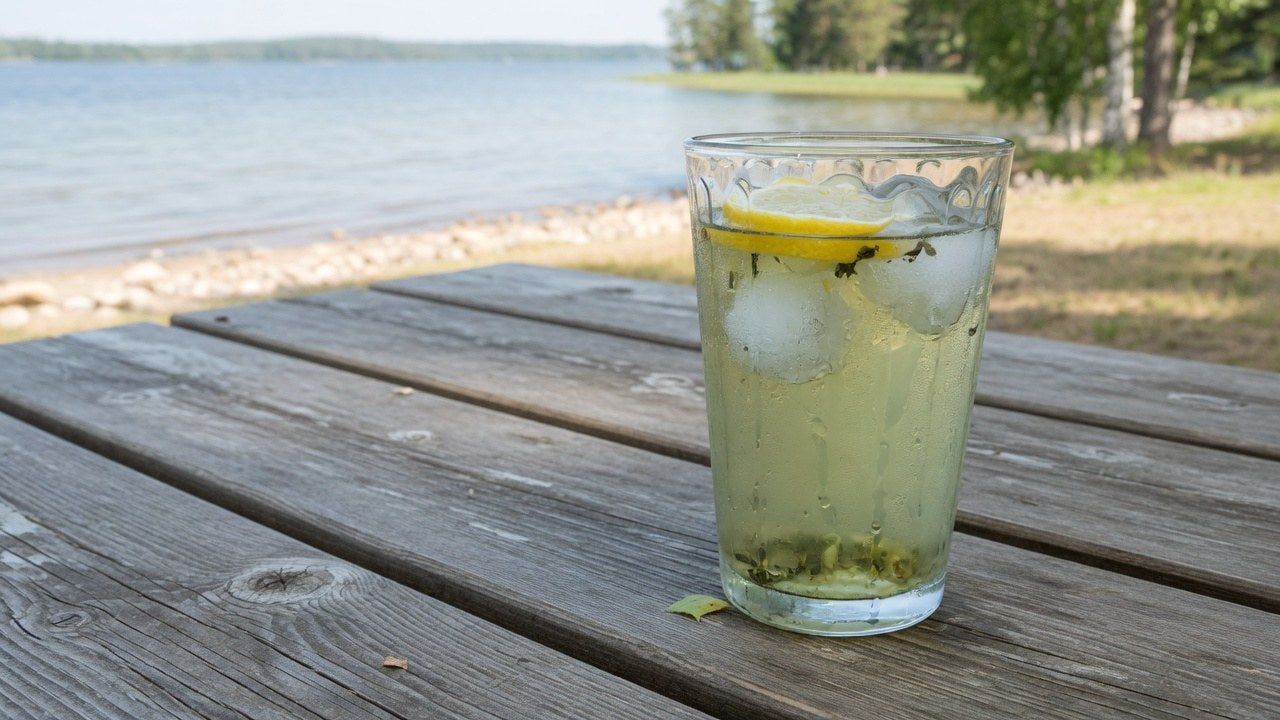
Cold brew tea is tea that is steeped in cool or room-temperature water over several hours, rather than brewed with hot water. Because the leaves release their flavour slowly and gently, cold brew tastes noticeably sweeter and smoother than hot tea, with far less bitterness. It is not the same as iced tea, and the difference comes down to how the tea meets the water.
Cold brew tea vs iced tea vs hot tea
People often use "cold brew" and "iced tea" to mean the same thing, but they are made very differently. Traditional iced tea is brewed hot and then cooled with ice. That is fast, but heating and then rapidly chilling the tea forces two abrupt changes in the leaf, which can leave the cup sour or bitter. Cold brew skips the heat entirely, so the flavour stays clean and rounded.
| Method | Water temperature | Typical time | Taste |
|---|---|---|---|
| Hot tea | 75 to 100°C | 1 to 5 minutes | Full-bodied, can turn bitter if over-steeped |
| Iced tea (hot-brewed, then chilled) | Brewed hot, poured over ice | Minutes | Quick, but often sour or bitter |
| Cold brew tea | Cool or room temperature | 6 to 20 hours | Smooth, sweet, low in bitterness |
Patience is the other big difference. Where 10 extra minutes can ruin a hot cup, cold brew is forgiving: even 10 hours in the fridge will not turn it harsh. A batch left to steep overnight simply comes into its own by morning.

Why cold brew tea tastes different
Cool water draws out the sweet, aromatic compounds in the leaf while leaving behind much of the tannin that makes over-brewed hot tea astringent. The slow, gentle extraction means cold brew tends to be lower in caffeine than the same tea brewed hot, while still carrying plenty of the antioxidants tea is known for. The result is a soft, naturally sweet drink that needs no sugar.

Where cold brew came from
Cold extraction is not a modern invention. The technique has been used in Japan since the 17th century, where it is said to have arrived with Dutch traders. Cold brew coffee brought the idea back into fashion a few years ago, and tea has followed. It is an easy way to enjoy tea on a hot day without standing over a kettle.
Which teas work for cold brew?
Almost any tea suits cold extraction: green tea, rooibos, herbal tea, oolong, black tea, loose leaf, or teabags all work. You can also blend flavours to discover new combinations. The tea type changes the timing a little, with black tea steeping a touch longer than green. As a rule of thumb, a steep overnight is ideal, anywhere from 6 to 20 hours, so follow your own taste and sample as you go. Whole-leaf, loose teas like our loose leaf tea are especially rewarding cold, and a delicate green tea is a brilliant place to start.
Ready to try it?
Making cold brew is genuinely simple: measure tea into a container, add cool water, and let it rest for several hours in the fridge. For the full method, ratios, and step-by-step timing, see our guide on how to make cold brew tea. If green tea is your favourite, we have a dedicated walkthrough on cold brew green tea and why it is different. And if you prefer your tea hot, our guide to making a perfect cup of tea covers temperatures and steeping times for every type.
Once you are comfortable, a step further is ice brewing: the tea steeps directly in ice rather than cool water, and you get a tasty first sip in about 30 minutes as the ice melts at room temperature.
Related products
Teas that shine cold-brewed:
Browse the full Loose leaf tea.
Frequently asked questions
What is cold brew tea?
Cold brew tea is tea steeped in cool or room-temperature water for several hours, instead of being brewed with hot water. The slow extraction gives a smoother, sweeter cup with less bitterness.
Is cold brew tea the same as iced tea?
No. Iced tea is brewed hot and then chilled with ice, which can taste sour or bitter. Cold brew never uses heat, so the flavour stays clean, sweet, and rounded.
Does cold brew tea have less caffeine?
Yes, generally. The gentle cold extraction pulls out less caffeine than hot brewing, while still keeping plenty of the antioxidants found in tea.
How long does cold brew tea take?
Most teas are ready after 6 to 20 hours in the fridge, with overnight being a reliable choice. Black tea usually needs a little longer than green tea.
Which teas can I use for cold brew?
Almost any tea works, including green, black, white, oolong, rooibos, and herbal teas, as loose leaf or in bags. You can also blend flavours to create your own combinations.


