
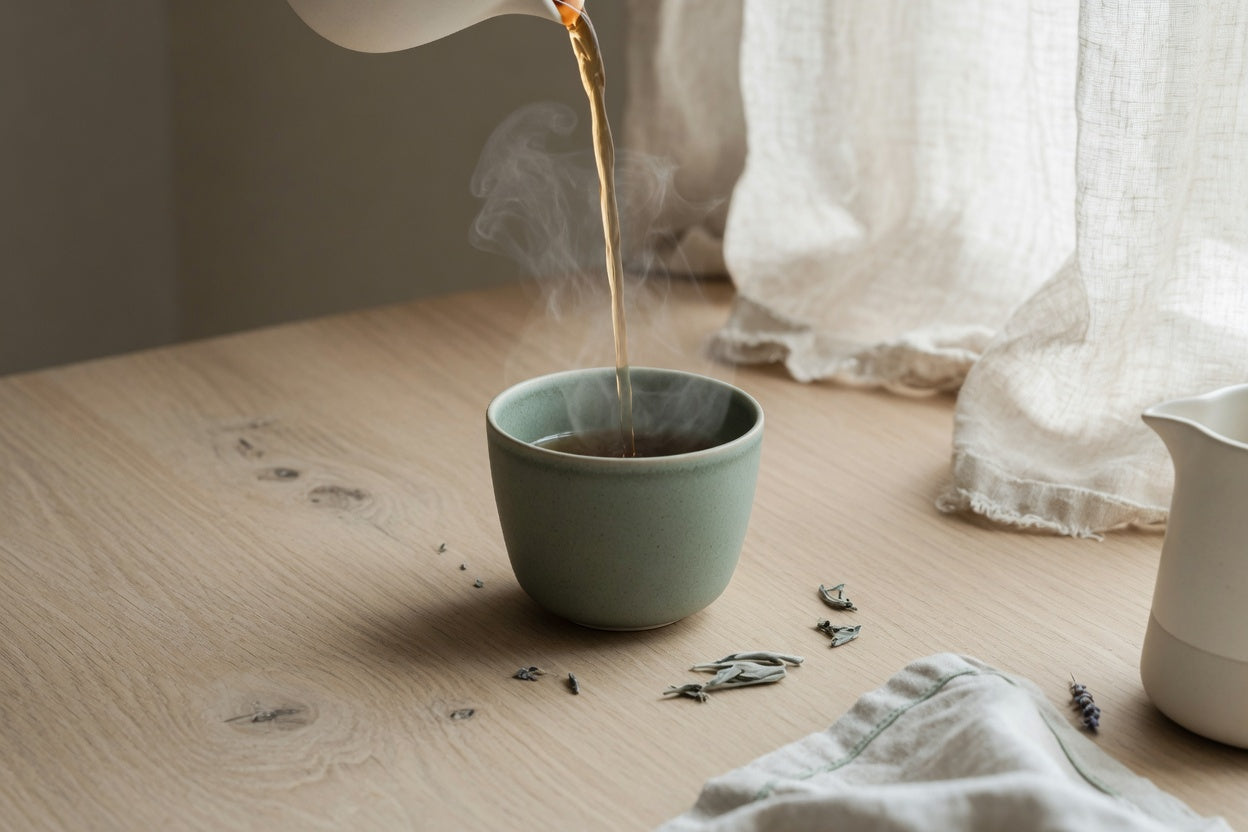
Brewing temperature and time are the biggest levers you control over caffeine and tannins in tea. Hot water and a long steep release the most of both, giving a stronger, more astringent cup, while cold water releases far less, for a milder and smoother drink. So if you want more lift in the morning, brew hot; if you want something gentle in the evening, brew cold.
How temperature changes caffeine
Caffeine is a natural stimulant found in tea, coffee and cocoa, and most of us know its effect well: it wakes you up. The amount in tea depends on the type of leaf, how it is grown and how it is produced. Black teas and green matcha, for example, contain noticeably more caffeine than most other teas.
You also influence the amount yourself when you brew. Typically tea holds between 6 and 28 milligrams of caffeine per decilitre. Heat releases caffeine, and the longer the leaves stay warm, the more is drawn out. Cold extraction pulls far less into the cup, often a third to a half less than a hot brew, which works out at roughly 2 to 20 milligrams per decilitre.
| Brewing method | Caffeine released | Approx. per decilitre | Best for |
|---|---|---|---|
| Hot water, long steep | Most | Up to about 28 mg | A morning boost |
| Hot water, short steep | Moderate | Around the middle | An everyday cup |
| Cold water (cold brew) | Least, a third to half less | About 2 to 20 mg | An evening or relaxing drink |
This gives you a simple trick: brew your favourite tea hot in the morning and cold in the evening to adjust the caffeine to suit the time of day. Most loose teas can be brewed either way, so it is worth experimenting with your usual loose leaf tea.
What tannins do in tea
Tannin is best known from wine, but it is also found in tea. Tannins are phenolic compounds present in many plants, including grapes, nuts and tea leaves, and they travel with the leaf all the way into your cup. That is why you can sometimes taste a wine-like dryness in a strong tea.
In young, growing leaves tannins exist as catechins. When the leaves meet hot water, those tannins are released. This is not a bad thing in itself, as tannins are among the antioxidants that may support the body's natural defences.
Tannins taste both dry and slightly bitter, and you may feel them as a tightening sensation on the gums. In hot tea they are more pronounced; in cold-brewed tea they stay gentler, which is why cold extraction gives a softer, milder flavour overall.
Choosing your brew
If you find a tea too bitter or astringent, lower the water temperature or shorten the steep to draw out fewer tannins. For the smoothest, lowest-caffeine result, try brewing cold. Our guide to making cold brew tea walks you through it step by step.
Related products
Experiment with leaf and temperature using these teas:
Browse the full Loose leaf tea.
Frequently asked questions
Does hot or cold water release more caffeine in tea?
Hot water releases more caffeine, especially with a long steep. Cold brewing releases far less, often a third to a half less than a hot cup.
How can I lower the caffeine in my tea?
Use cooler water and a shorter steeping time, or brew the tea cold. A simple approach is to drink it hot in the morning and cold in the evening.
What are tannins in tea?
Tannins are natural phenolic compounds found in tea leaves, grapes and nuts. They give tea a dry, slightly bitter taste and a tightening feel on the gums, and they act as antioxidants.
Why does cold brew tea taste smoother?
Cold water releases fewer tannins and less caffeine than hot water, so a cold brew tastes milder, smoother and less astringent than the same tea brewed hot.
Which teas have the most caffeine?
Black teas and green matcha generally contain the most caffeine. The exact amount also depends on how the tea is grown, produced and brewed.


