
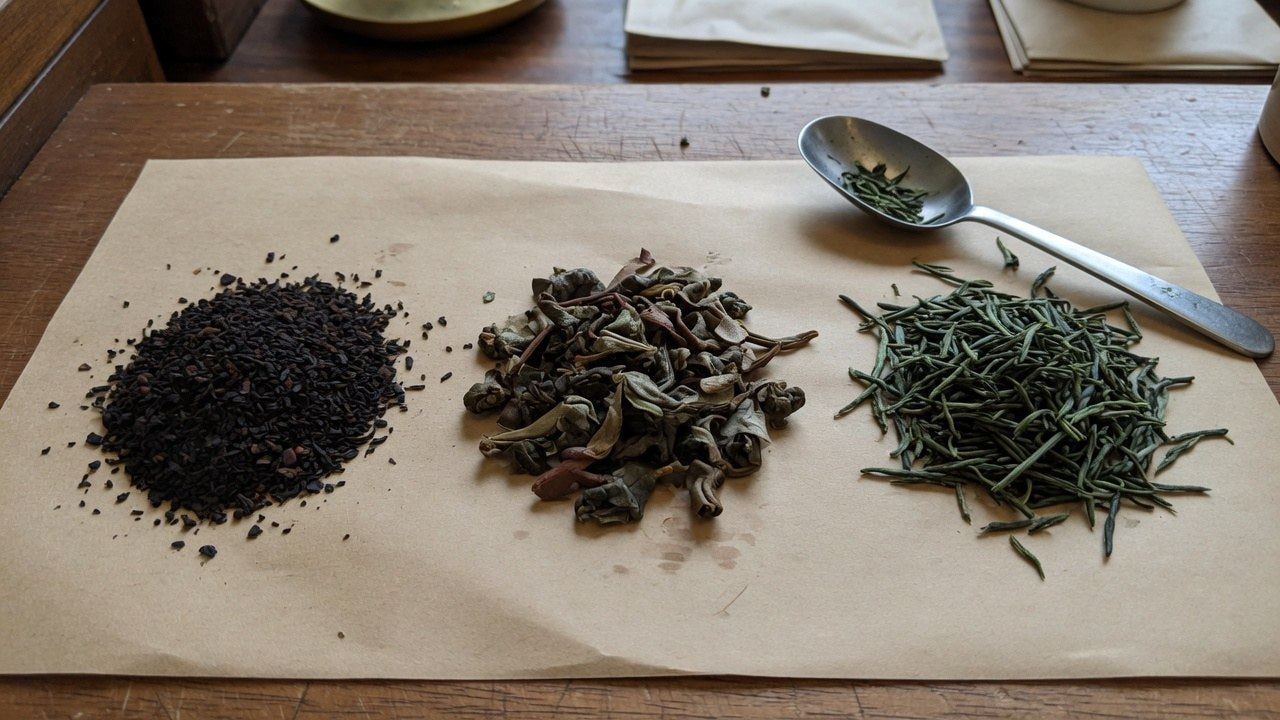
Grades like OP, BOP and FBOP describe leaf size and style, not a simple good-to-bad ranking. Whole leaf, broken leaf and finer particles brew differently. Final quality and price still come down to tasting. You will see these marks most clearly on our loose leaf tea and Classic selection.
How tea classification works
A full classification is built from five elements, read together on the label:
- Habitat: where the tea was grown.
- Plant growth: the part and condition of the plant picked.
- Picking: the leaf grade, for example FOP.
- Post-treatment: how the leaf is processed, for example Broken, Fannings or Dust.
- Season: the harvest, for example First Flush or Autumnal.
Leaf grades (whole leaf)
Whole-leaf grades use the youngest, most tender leaves at the tip of the shoot. The more tips and the finer the plucking, the higher the grade tends to be.
| Grade | Meaning | What it tells you |
|---|---|---|
| OP | Orange Pekoe | The two top leaves picked when fully open. Larger leaves than FOP. |
| FOP | Flowery Orange Pekoe | Fine, downy leaf with the top two leaves and the unopened bud (the tip). |
| GFOP | Golden Flowery Orange Pekoe | FOP with a good proportion of golden tips. |
| TGFOP | Tippy Golden Flowery Orange Pekoe | An especially high proportion of golden tips. Among the finest leaf teas. |
Broken grades
Broken grades are cut after rolling. Smaller pieces release flavour faster and give a stronger, brisker cup.
| Grade | Meaning | What it tells you |
|---|---|---|
| BOP | Broken Orange Pekoe | The same leaf as OP, cut into smaller pieces. |
| FBOP | Flowery Broken Orange Pekoe | Like FOP but with the leaves cut after rolling to enhance flavour. |
| GFBOP | Golden Flowery Broken Orange Pekoe | FBOP with golden tips. |
| BP | Broken Pekoe | The third leaf down, cut by machine. Contains more stem, giving a thinner aroma. |
Fannings and dust
The smallest grades are sieved out during sorting. They are rich and colour the cup quickly with a strong flavour, which is why they are mostly used in tea bags.
| Grade | Meaning | What it tells you |
|---|---|---|
| F | Fannings | Small particles sieved out, with no leaf stalks or stems. |
| D | Dust | The finest material from sieving. Very strong and fast-brewing, ideal for tea bags. |
Harvest seasons (the flush)
The season of picking gives a tea much of its character. The same garden can taste quite different across the year.
| Season | Character |
|---|---|
| First Flush | The first spring picking, famous in Darjeeling. Fresh, green and aromatic after the winter rest. |
| Second Flush | The next opening of leaves, often superb, with a stronger aroma than spring. |
| Autumnal | The autumn harvest, milder than mid-summer and excellent from some estates. |
Put together, these labels are a short language for describing leaf and harvest. They help you choose between a delicate whole-leaf tea and a brisk broken one, but remember the taster always has the final word on quality.
Related products
Taste classic leaf styles from our range:
- CLASSIC Ceylon FBOP 80 g
- CLASSIC China Gunpowder 100 g
- CLASSIC China Pu Erh 80 g
- CLASSIC Formosa Jade Oolong 60 g
Browse the full Classic collection.
Frequently asked questions
What does OP mean on tea?
OP stands for Orange Pekoe. It describes a whole-leaf black tea made from the top two leaves picked when fully open. The name refers to leaf style, not flavour or colour.
What is the difference between OP and BOP tea?
OP is whole leaf, while BOP (Broken Orange Pekoe) is the same leaf cut into smaller pieces. Broken leaf brews faster and gives a stronger, brisker cup.
Does a higher tea grade mean better quality?
Not always. Grades describe leaf size and the number of tips, not taste. A professional taster decides the actual quality and price, so a high grade is a guide rather than a guarantee.
What does FBOP stand for?
FBOP means Flowery Broken Orange Pekoe. It is similar to FOP but the leaves are cut after rolling to release more flavour.
What is First Flush tea?
First Flush is the first spring harvest, most famous in Darjeeling. The leaves are fresh, green and aromatic after the bush rests through winter.


