
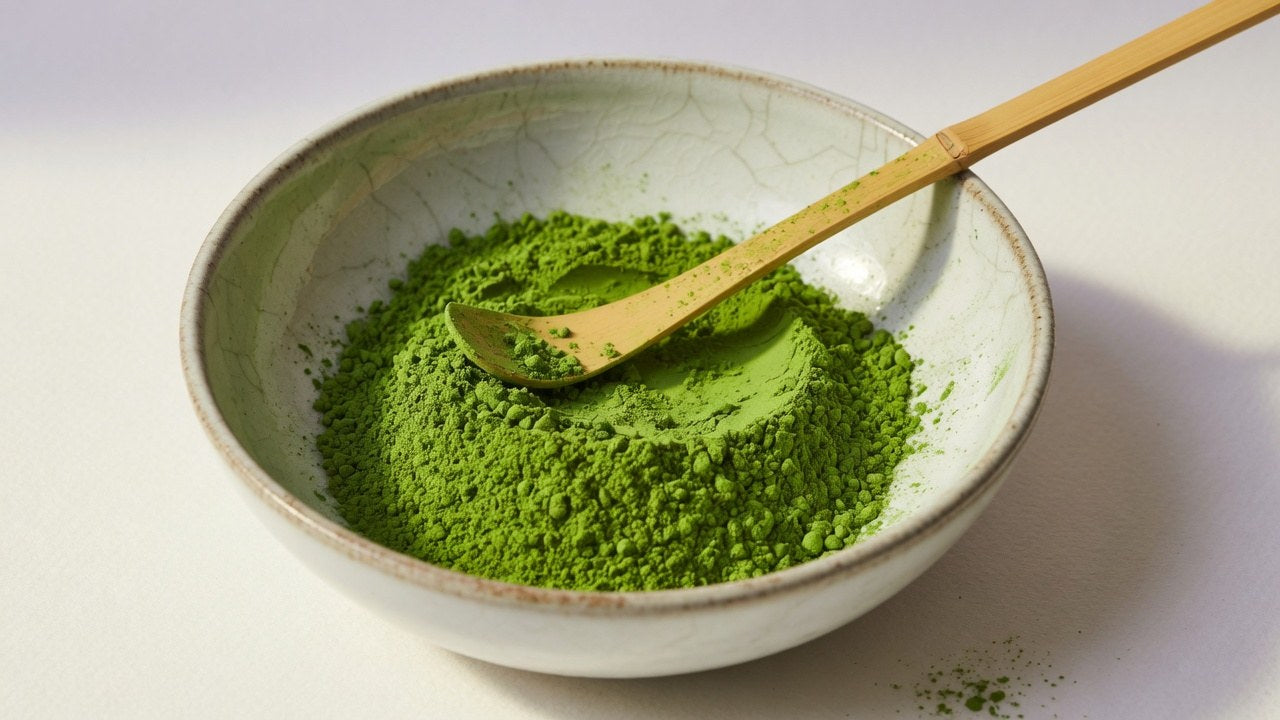
Matcha is one of the easiest teas to cook with. Because it is a fine powder rather than loose leaves, it stirs straight into batters, creams, and frostings, and it lends a striking bright-green colour that looks especially beautiful in light-coloured dishes. It also brings a gentle, grassy sweetness that pairs naturally with cream, white chocolate, citrus, and berries. Below are two of our favourite matcha dessert recipes, plus quick ideas for using up the rest of the tin.
If matcha is new to your kitchen, our guide to what matcha is and where it comes from is a good place to start, and you can pick up a baking-friendly powder such as Riku Matcha from our Japanese green tea range.
A quick tip before you bake
Always sift matcha before adding it to a recipe. The powder clumps easily, and a lump of undissolved matcha tastes intensely bitter. For drinks and creams, dissolve it in a little warm (not boiling) liquid first, the same way you would when you prepare matcha as a tea. A little goes a long way, so add it gradually and taste as you go.
Matcha panna cotta (matchacotta)
An Italian classic reinvented with matcha. This velvety-smooth matchacotta has a fresh, lightly grassy flavour and makes an elegant dessert for any table.
Makes 4 servings.
You will need
- 3 dl whole milk
- 4 dl cream
- 3.5 gelatine leaves
- 1 dl caster sugar
- 2 teaspoons matcha tea powder (such as Riku Matcha)
- 2 teaspoons vanilla sugar
- To decorate: fresh berries such as raspberries, and whipped cream
How to prepare
- Lightly grease 4 serving dishes or glasses.
- Soak the gelatine leaves in cold water.
- In a saucepan, combine the milk, cream, sugar, matcha, and vanilla sugar. Bring gently to the boil over low heat, whisking so the matcha dissolves smoothly.
- Squeeze the water from the gelatine and whisk it into the hot liquid. Remove from the heat.
- Let cool for a moment, stirring now and then, then divide between the dishes. Cover and refrigerate overnight.
- Serve straight from the dishes, or turn out onto plates by dipping each dish in hot water for a few seconds.
- Garnish with fresh berries and whipped cream.

Raw matcha brownies
These no-bake brownies are gluten-free and dairy-free. There is no oven involved, just some chilling time. The two layers, a fudgy cocoa base under a smooth matcha top, reward a little patience and look as good as they taste.
You will need
Cocoa layer:
- 3.5 dl pecans
- 0.75 dl cocoa powder
- 1 teaspoon vanilla sugar
- 1 teaspoon peanut butter
- A pinch of salt
- 16 dates
Matcha layer:
- 1 dl cocoa butter
- 0.75 dl maple syrup
- 1 tablespoon matcha tea powder (such as Riku Matcha)
How to prepare
- Grind the pecans to a coarse powder. Add to a blender with the cocoa powder, vanilla sugar, and a pinch of salt. Add the dates and blend until the mixture forms a sticky mass.
- Press the cocoa mixture into a small, shallow dish in an even layer. Chill in the fridge to set for at least three hours.
- Gently melt the cocoa butter with the maple syrup in a water bath, stirring constantly.
- Sift the matcha powder into the butter and syrup mixture and whisk until smooth.
- Pour the matcha layer evenly over the chilled cocoa base. Return to the fridge for at least one hour.
- Cut into squares and serve with a bowl of matcha tea.
More easy ways to cook with matcha
Once you are comfortable with the basics, matcha slips easily into all sorts of treats:
- Matcha latte and smoothies: whisk a measure into warm milk, or blend with banana and yoghurt for a green smoothie.
- Baking: fold a teaspoon or two into muffin, sponge cake, or cookie batter for colour and flavour.
- Frosting and cream: sift matcha into whipped cream, buttercream, or cream cheese frosting.
- Energy balls and granola: mix matcha into oat-and-date energy balls or sprinkle it through homemade granola.
Related products
Matcha for baking and sipping:
Browse the full Green tea collection.
Frequently asked questions
Can you bake and cook with matcha?
Yes. Matcha is a fine powder, so it mixes easily into batters, creams, and frostings, adding a bright green colour and a gentle grassy flavour. It works in everything from panna cotta and brownies to lattes and muffins.
How much matcha should I use in a dessert?
Start small and taste as you go. One to two teaspoons is enough to flavour and colour a dessert for four people. Too much can taste bitter, so add it gradually.
What kind of matcha is best for baking?
A good culinary or all-purpose matcha is ideal for baking, since heat and other ingredients mask the subtle notes you would pay extra for in ceremonial grade. Whichever grade you use, sift it first to avoid lumps.
Why does my matcha taste bitter in recipes?
Bitterness usually comes from using too much powder, from lumps that did not dissolve, or from overheating it. Sift the matcha, dissolve it in warm rather than boiling liquid, and keep the quantity modest.
