
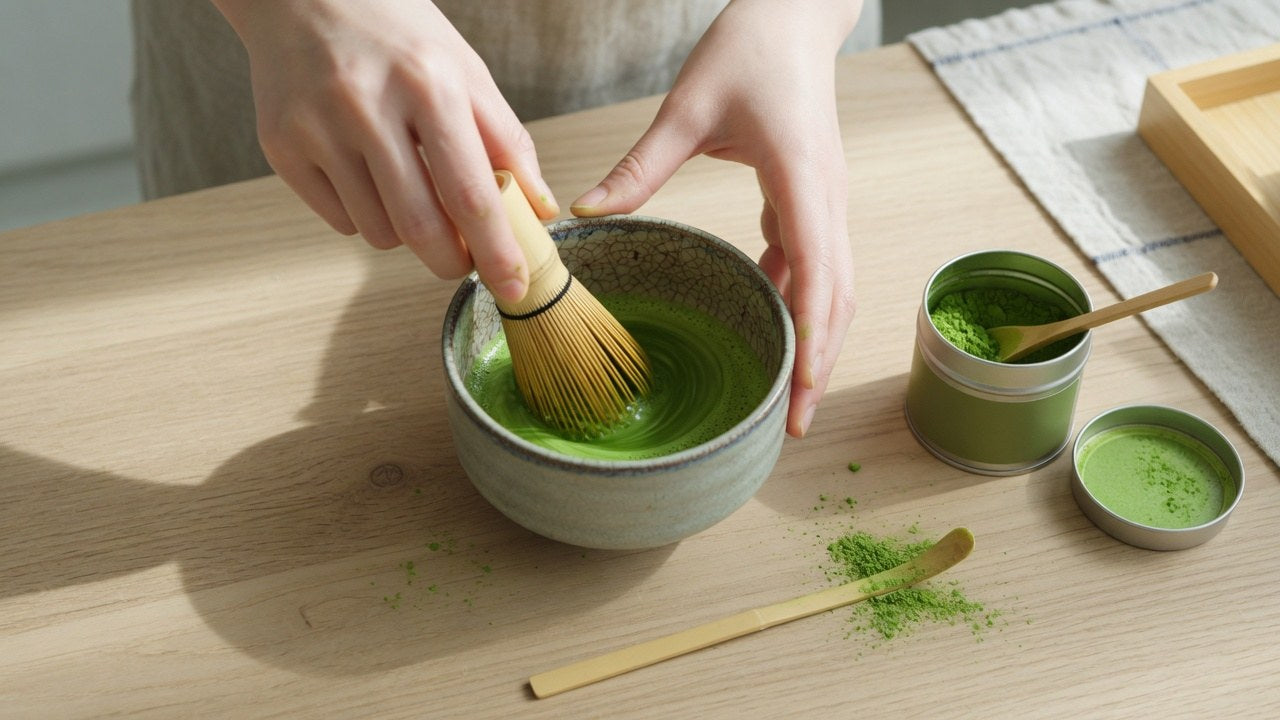
Matcha is a finely ground green tea powder made from specially shade-grown leaves of the tea plant, Camellia sinensis. Unlike loose-leaf tea, where you steep the leaves and discard them, with matcha you whisk the whole powdered leaf into water and drink it, so you consume the entire leaf. As for where matcha comes from: it was first cultivated in China, then spread to Japan where it became central to the tea ceremony, and today it is also grown in Korea and enjoyed around the world.
So matcha is a true green tea, just prepared very differently. Below we walk through how it is grown and produced, from cultivation to canning.
Matcha is produced through traditional steps
Matcha is made from the leaves of the tea plant, like other green teas, but the cultivation uses special methods that differ from those used for ordinary tea and that have been refined since the 1100s. The plants are grown, their finest leaves are harvested, and the leaves are then processed into powder rather than left whole. That extra care is what gives matcha its vivid colour and concentrated flavour.
Growing matcha: the role of shade
Matcha tea plants grow to about 1.5 metres across. They are grown in sunny spots for most of the year, but are covered with shade about a month before harvest. Reducing the sunlight slows photosynthesis, which prompts the plant to build up more chlorophyll and amino acids in the leaf.
In the shade the leaves grow thin and broad, and the colour deepens to a bright green. At the same time the plant accumulates amino acids and other desirable substances, which is what gives high-grade matcha its smooth, savoury (umami) character.
From tea leaves to matcha powder
The leaves are harvested in May. At this stage they are called tencha. The tencha is taken to be dried and then steamed, which stops the leaves from fermenting (oxidising) and locks in the green colour.
After steaming, the leaves are dried again and the stems, veins, and other impurities are removed, leaving only the purest leaf material. This refined tencha is then ground the traditional way using a stone mill. The result is a fluffy, fine powder with a bright green colour. The finished matcha is stored in airtight containers away from sunlight, ready to travel to tea drinkers around the world.
| Stage | What happens |
|---|---|
| Shading | Plants are covered about a month before harvest to boost chlorophyll and amino acids |
| Harvest | The finest leaves are picked in May, at which point they are called tencha |
| Steaming | Leaves are steamed to stop oxidation and preserve the green colour |
| Drying and sorting | Stems and veins are removed, leaving only pure leaf material |
| Grinding | Tencha is stone-milled into a fine, bright green powder |
Because matcha is whisked rather than steeped, the preparation is a craft in itself. For a step-by-step guide, see making matcha tea. If you are weighing matcha against other Japanese green teas, our guide on matcha vs sencha and gyokuro explains the real differences. Curious about the wellness side? Read does matcha tea have health benefits.
Matcha is part of our wider green tea range, and you will find it among our natural tea series too.
Related products
Explore matcha and related green teas from Nordqvist:
Browse the full Green tea collection.
Frequently asked questions
What is matcha?
Matcha is a finely ground green tea powder made from shade-grown leaves of the tea plant. Instead of steeping and removing the leaves, you whisk the powder into water and drink the whole leaf, which gives matcha its strong colour and flavour.
Where does matcha come from?
Matcha was first cultivated in China, then spread to Japan, where it became central to the tea ceremony. Today it is also grown in Korea and enjoyed worldwide.
Is matcha a green tea?
Yes. Matcha is a true green tea made from the same plant, Camellia sinensis. The difference is in how it is grown (shaded before harvest) and processed (steamed, dried, and stone-ground into powder).
Why is matcha grown in the shade?
Shading the plants for about a month before harvest slows photosynthesis, which increases chlorophyll and amino acids in the leaves. This gives matcha its bright green colour and smooth, savoury taste.
What are tencha leaves?
Tencha is the name for the harvested matcha leaves after they have been steamed and dried but before grinding. Once the stems and veins are removed, the tencha is stone-milled into matcha powder.
