
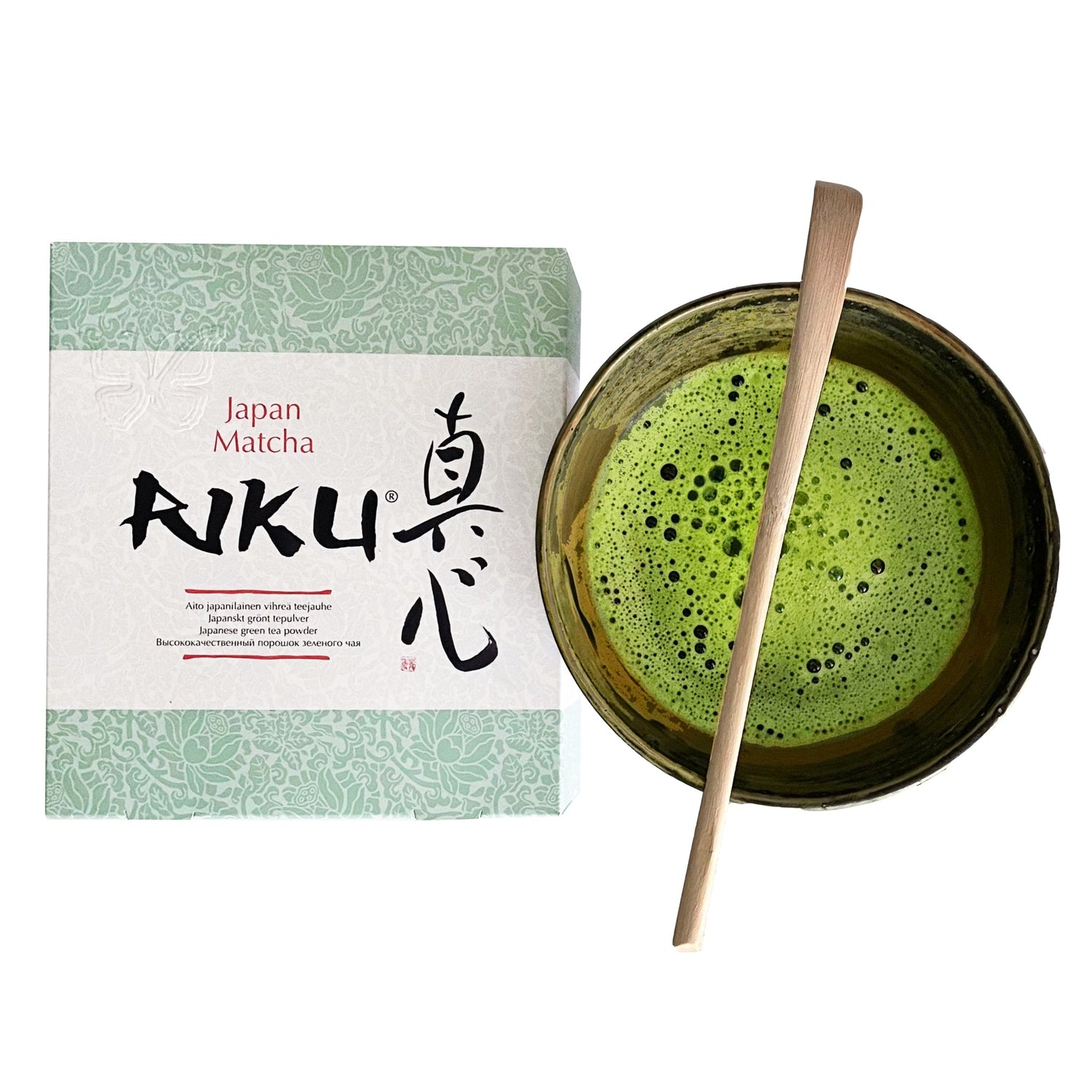
Yes, matcha may offer real health benefits. Because you drink the whole powdered leaf, a single cup delivers more antioxidants than a standard cup of steeped green tea, and small studies link it to better focus, lower stress, and increased fat burning. Matcha is still just a tea, not a medicine, so think of these as benefits that may support good health rather than cures. Below we walk through what the research has actually shown.
If you want to understand where this tea comes from before diving into the science, start with our guide to what matcha is and where it comes from.
The secret ingredient: EGCG
All green teas contain an antioxidant called epigallocatechin gallate, or EGCG for short. It is one of the most studied compounds in tea and is thought to help the body defend itself against everyday cellular stress.
In 2003, researchers Weiss and Anderton compared the EGCG content of matcha with other green teas. They found that matcha contains roughly three times the amount of EGCG of a typical loose-leaf green tea, with other coloured teas falling further behind. The reason is simple: with matcha you consume the entire ground leaf rather than discarding it after steeping.
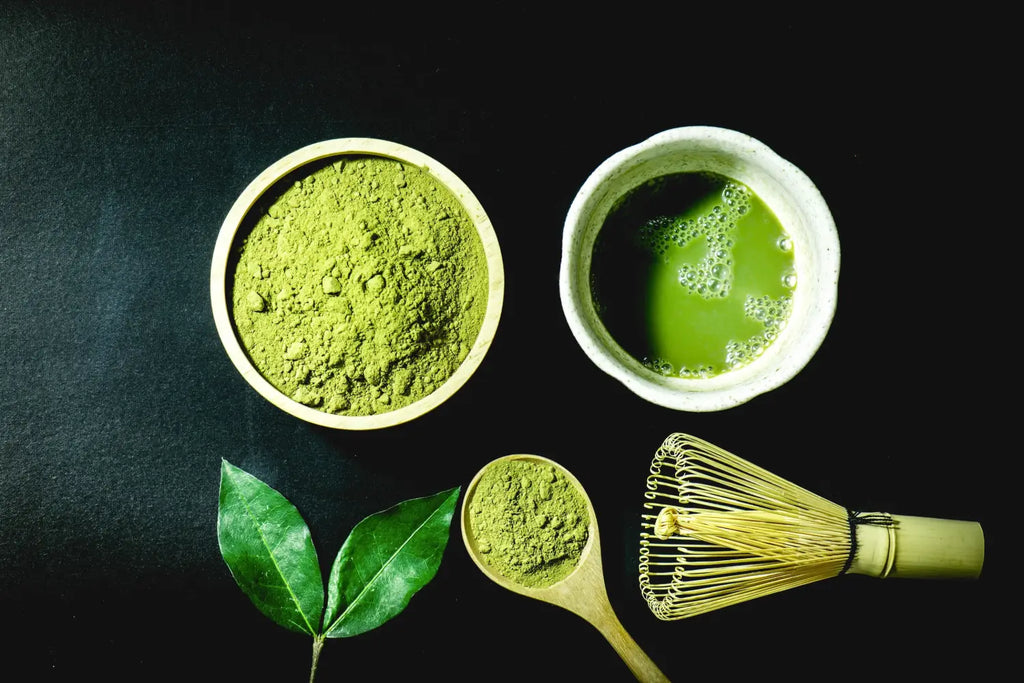
What the research says about matcha
Several small studies have looked at how matcha affects everyday aspects of health. Sample sizes are modest, so the findings are indicative rather than definitive, but together they point in a consistent direction.
- Stress and calm: a 2018 study led by K. Unno tested matcha against a placebo in mice and found that matcha relieved symptoms of stress. The effect is often credited to L-theanine, an amino acid in shade-grown green tea that promotes a calm, focused state.
- Fat burning: Willems and colleagues (2018) had thirteen young women drink matcha before brisk walking and measured a meaningful increase in fat oxidation during the exercise.
- Focus and mood: Dietz and colleagues (2017) found that consuming matcha improved performance on attention-demanding and psychomotor tasks compared with a placebo.
Should matcha be drunk or eaten?
The powdered form makes matcha easy to stir into lattes, smoothies, and baking, and it lends a vivid green colour to food. For taste and creativity, both work well, and you can find plenty of ideas in our guide to cooking and baking with matcha.
For the health benefits specifically, the research favours drinking it. In the same 2017 study, the body made better use of matcha consumed as a drink than as a snack bar. So if you are after the antioxidants and the focus boost, prepare it as a tea.
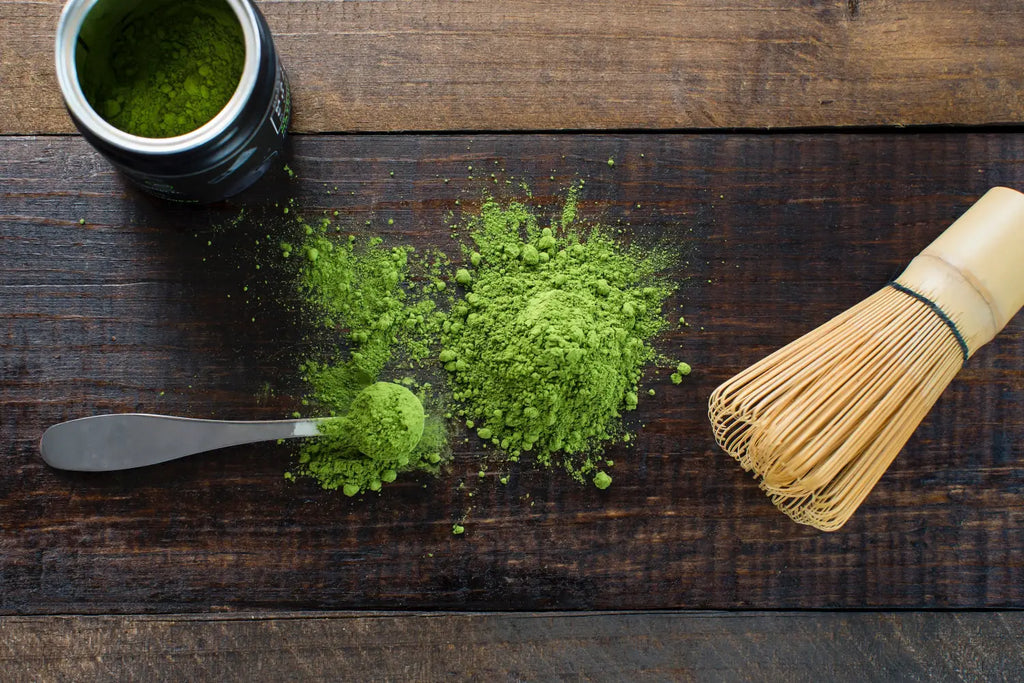
A calm ritual, not just a supplement
Even setting the science aside, a cup of hot, frothed matcha is an enjoyable moment in its own right, and it is best when shared. If you would like to taste it for yourself, explore our Japanese green teas, or browse the wider Natural Tea Series.
Related products
Shop matcha and green teas that fit this topic:
Browse the full Green tea collection.
Frequently asked questions
Is matcha good for you?
Matcha is rich in antioxidants, especially EGCG, and small studies link it to better focus, lower stress, and increased fat burning during exercise. It may support good health as part of a balanced diet, but it is a tea rather than a medical treatment.
Does matcha have more antioxidants than regular green tea?
Yes. Because you drink the whole ground leaf rather than discarding it, research has measured roughly three times the EGCG of a typical cup of steeped green tea.
Does matcha help with focus?
Research suggests it can. A 2017 study found that matcha improved performance on attention-demanding tasks, an effect often credited to the combination of caffeine and the calming amino acid L-theanine.
Is it better to drink matcha or eat it?
For the health benefits, drinking it is better. A 2017 study found the body made better use of matcha consumed as a drink than as a snack bar, though eating it is perfectly fine for flavour.
