
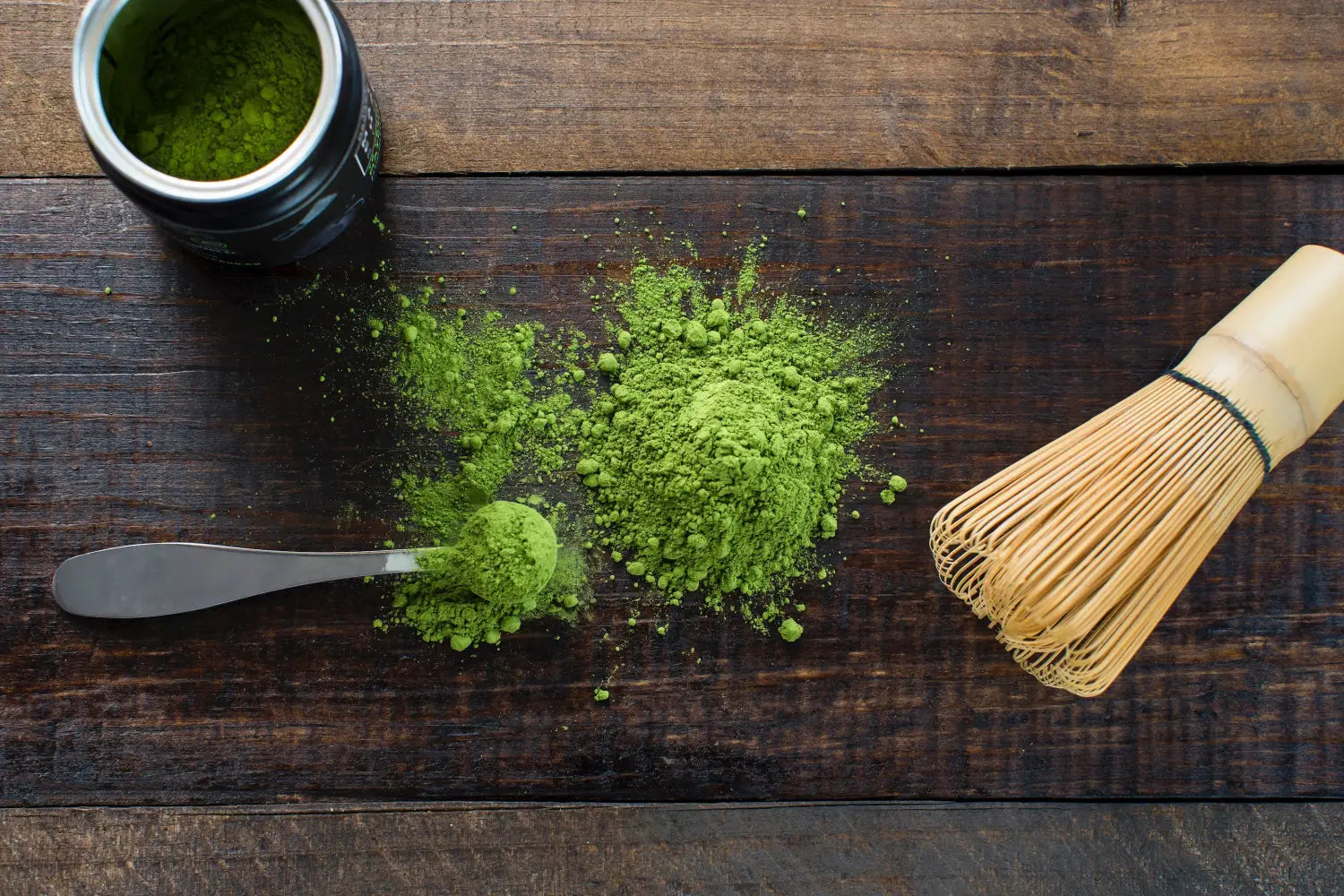
To make matcha, sift a small measure of powder into a wide bowl, add water at about 80°C, and whisk in a W or M motion until you get a smooth foam. You do not steep matcha like leaf tea. The whole powdered leaf goes into the water, which is why the cup tastes creamy and carries the full leaf. Use the ratio table below to scale from a strong shot to a milder bowl.
New to this tea? Our guide to what matcha is and where it comes from covers the background, and you can find a ceremonial-grade option in our Japanese green tea range.
Matcha ratios and temperature at a glance
| Style | Matcha | Water | Water temperature |
|---|---|---|---|
| Usucha (thin, everyday) | 1 measure (about 1 g, 0.5 tsp) | 60 to 70 ml | About 80 C |
| Koicha (thick, strong) | 2 measures (about 2 g) | 30 to 40 ml | About 80 C |
| Matcha latte | 1 to 2 measures | 40 ml water plus warm milk | About 80 C |
The key rule: never use boiling water. Water that is too hot scorches the powder and makes it bitter. Around 80 C keeps the flavour smooth and sweet.
Step by step: one serving
You will need: a wide bowl or mug, a chasen (bamboo whisk), one measure of matcha (such as our Riku Matcha), and water heated to about 80 C.
- Warm and soften. Bring the water to a simmer, then pour a little into your bowl to warm it and rest the chasen tips in it to soften. Let the rest of the water cool for about two minutes to reach roughly 80 C.
- Empty and dry. Pour the water out and dry the bowl carefully so the powder does not stick to the bottom.
- Sift the matcha. Measure the matcha into the bowl, sifting it through a small strainer to break up any clumps.
- Make a paste. Add a small splash of water and stir with the chasen until the powder is smoothly mixed. Do not press the whisk hard against the bottom, as the tines can break.
- Add the rest. Pour in the remaining water. Use less water for a strong tea and more for a mild one.
- Whisk to a froth. Whisk rapidly back and forth in a W or M shape until a creamy foam forms on the surface. Avoid scraping the edges of the bowl. Enjoy immediately.
Tip: you can whisk the matcha in a separate bowl and then pour it into your favourite mug for serving.

The traditional tools (and everyday swaps)
- Chasen: a slightly bell-shaped bamboo whisk that breaks up lumps and creates the froth. An ordinary kitchen whisk or a battery milk frother works well too, and in a pinch a fork will do, though the foam will be thinner.
- Chashaku (measure): a slim bamboo scoop, a bit like a miniature hockey stick, used to portion the powder. One measure is about 0.25 of a teaspoon, so a regular teaspoon works fine as a substitute.
- No tools? No problem: a small jar with a tight lid is a great cheat. Add the matcha and water, seal it, and shake hard for a few seconds to dissolve and froth it.
How to store matcha so it stays fresh
Once opened, matcha is sensitive to air, light, moisture, and strong smells. Store it well and every cup will taste as good as the first.
- Keep it sealed: close the tin tightly after every use, as the powder clumps and loses aroma when exposed to air.
- Out of the light: keep it out of direct sunlight, ideally in a closed cupboard, since light degrades the colour and flavour.
- Cool, then room temperature: store an unopened pack in the fridge to extend its life, but once opened keep it at room temperature so it does not absorb fridge odours.
- Away from spices: the powder readily picks up the smell of nearby spices and foods, so a shelf away from the cooking area is better than a busy kitchen cupboard.
Stored this way, matcha generally keeps its flavour for about a year. For more on keeping tea fresh, see our guide on how to store tea properly for long-lasting freshness.
Related products
Start with matcha, then explore other greens:
Browse the full Green tea collection.
Frequently asked questions
What water temperature is best for matcha?
About 80 C. Boiling water scorches the powder and turns it bitter, so let freshly boiled water cool for roughly two minutes before whisking.
How much matcha should I use per cup?
For everyday thin matcha, use about one measure (roughly 1 gram or half a teaspoon) to 60 to 70 ml of water. Use more powder and less water for a stronger, thicker bowl.
Can I make matcha without a bamboo whisk?
Yes. A small electric milk frother works very well, an ordinary kitchen whisk does the job, and shaking the matcha and water hard in a sealed jar is a reliable no-tools method.
Why is my matcha lumpy or bitter?
Lumps usually mean the powder was not sifted, so strain it before whisking. Bitterness usually means the water was too hot, so aim for about 80 C rather than boiling.
How long does matcha stay fresh?
About a year if stored well: sealed, out of direct light, and away from strong smells. Keep an unopened pack in the fridge, but store opened matcha at room temperature.
