
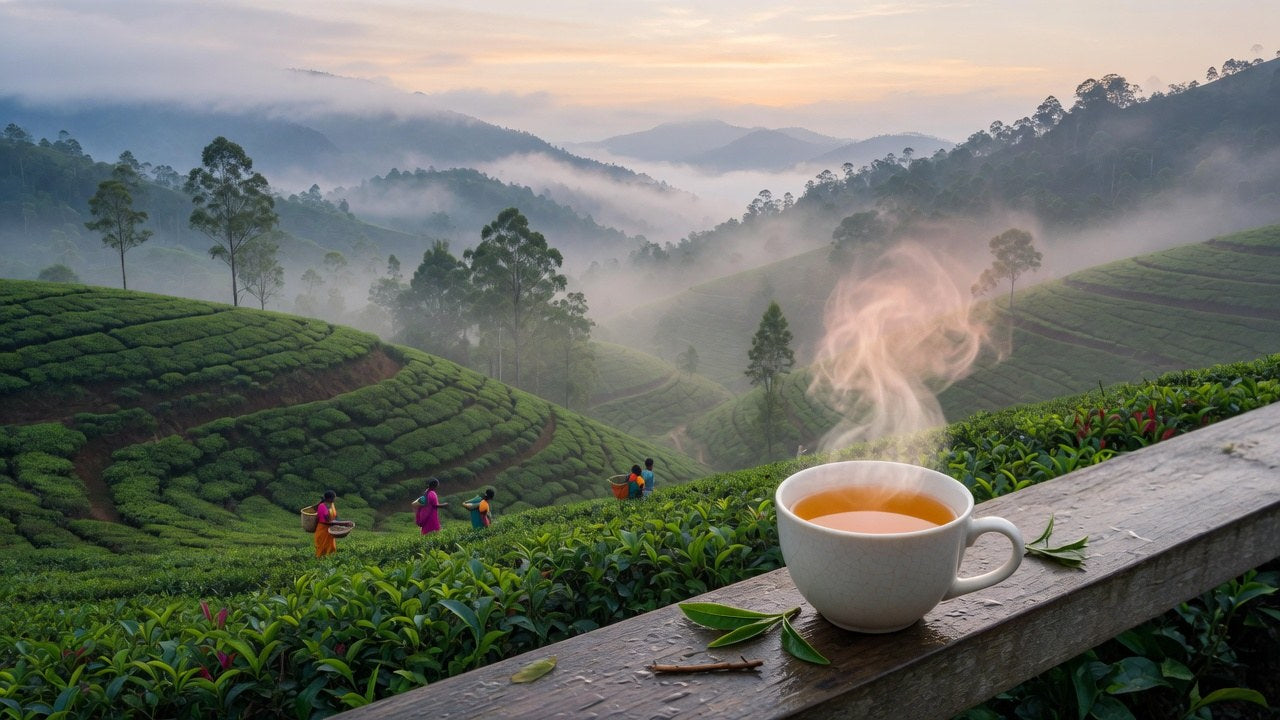
Ceylon tea is tea grown in Sri Lanka, the island formerly known as Ceylon. It is best known as a bright, brisk black tea with a citrusy snap, though Sri Lanka also produces green, white, and oolong styles. What sets it apart is terroir: the same plant grown at different altitudes gives strikingly different cups. Explore our own blends in the Ceylon tea collection.
What does Ceylon tea taste like?
Classic Ceylon black tea is bold and full-bodied with a crisp, almost citrusy brightness and a clean finish. That liveliness is the signature of the island. Flavours range from light and floral in high-grown teas to rich, malty, and chocolatey in low-grown ones, so there is a Ceylon to suit almost any palate. The unique geography and climate of Sri Lanka create this range of tastes.
Ceylon tea regions and their flavours
Sri Lanka's varied terrain produces teas with markedly different profiles depending on the growing region and its elevation:
| Region | Elevation | Flavour |
|---|---|---|
| Nuwara Eliya | High-grown | Delicate and light-bodied with citrusy notes; pale golden liquor |
| Dimbula | High-grown | Refreshing and mellow with hints of jasmine; golden-orange hue |
| Uva | High-grown | Smooth with woody undertones and a sweet finish; bright amber |
| Kandy | Mid-grown | Full-bodied and strong with hints of chocolate; deep amber |
| Ruhuna | Low-grown | Strong and full-flavoured with caramel sweetness; dark reddish-brown |
Altitude is the key. High-grown teas tend to be more delicate and nuanced, while low-grown varieties are bolder and more robust. Nordqvist's Classic Ceylon OP Nuwara Eliya is a clear example of the bright, high-grown style.
Types of Ceylon tea
Ceylon tea is produced in several styles, each with its own character:
- Black tea: Bold and full-bodied, with flavours ranging from citrusy to chocolatey. This is the most famous Ceylon style and a staple of the wider black tea collection. Nordqvist's Ceylon Loose Leaf is a fine example of high-quality Ceylon black tea.
- Green tea: Light and refreshing with grassy notes and a gentle astringency.
- White tea: Delicate, with soft floral notes and a honey-like sweetness.
- Oolong tea: Complex and balanced between black and green, ranging from light and floral to rich and woody.
How to brew Ceylon tea
The brewing method has a big effect on the final cup. Use about 2 to 3 grams of tea per 200 ml of water and adjust to taste. Loose leaf makes it easy to dial in the strength you like.
| Type | Water temperature | Steeping time |
|---|---|---|
| Black tea | 95 to 100°C | 3 to 5 minutes |
| Green tea | 70 to 80°C | 2 to 3 minutes |
| White tea | 65 to 70°C | 1 to 3 minutes |
| Oolong tea | 80 to 90°C | 2 to 5 minutes |
What gives Ceylon tea its flavour?
Several factors shape the character of every Ceylon tea:
- Altitude: Higher elevations generally produce more delicate flavours.
- Seasonal changes: Rainfall and temperature swings affect the profile, including the prized Uva winds.
- Processing methods: Oxidation levels and processing techniques steer the final taste.
- Soil composition: Mineral content in the soil adds subtle variation.
Pairing Ceylon tea with food
The range of flavours makes Ceylon tea versatile at the table:
- Light, high-grown teas (such as Nordqvist's Nuwara Eliya): pair with delicate pastries and fruit.
- Full-bodied, low-grown teas: stand up to hearty food and dark chocolate.
- Green Ceylon teas: lovely with light salads and seafood.
- Oolong styles: pair well with semi-soft cheeses and nuts.
Curious about more than flavour? Our guide to the health benefits of Ceylon tea covers what regular cups may support. Whether you reach for a bright Nuwara Eliya or a robust Ceylon Loose Leaf, each cup captures the terroir of Sri Lanka in the leaf.
Related products
Taste Ceylon from bags to loose leaf:
Browse the full Ceylon tea collection.
Frequently asked questions
What is Ceylon tea?
Ceylon tea is tea grown in Sri Lanka, the country once called Ceylon. It is usually a bright, brisk black tea, though green, white, and oolong Ceylon teas are also produced.
What does Ceylon tea taste like?
Classic Ceylon black tea is bold and full-bodied with a crisp, citrusy brightness and a clean finish. High-grown teas taste lighter and more floral, while low-grown teas are richer and maltier.
Does Ceylon tea have caffeine?
Yes. Ceylon black tea contains caffeine, much like other black teas. Green and white Ceylon styles generally contain less, depending on how they are brewed.
How do you brew Ceylon black tea?
Use fresh water at 95 to 100°C and steep for 3 to 5 minutes, with about 2 to 3 grams of leaf per 200 ml. Steep more briefly for a lighter cup.
Is Ceylon tea the same as black tea?
Not exactly. Ceylon refers to where the tea is grown (Sri Lanka), not the type. Most Ceylon tea is black tea, but Sri Lanka also makes green, white, and oolong styles.


